


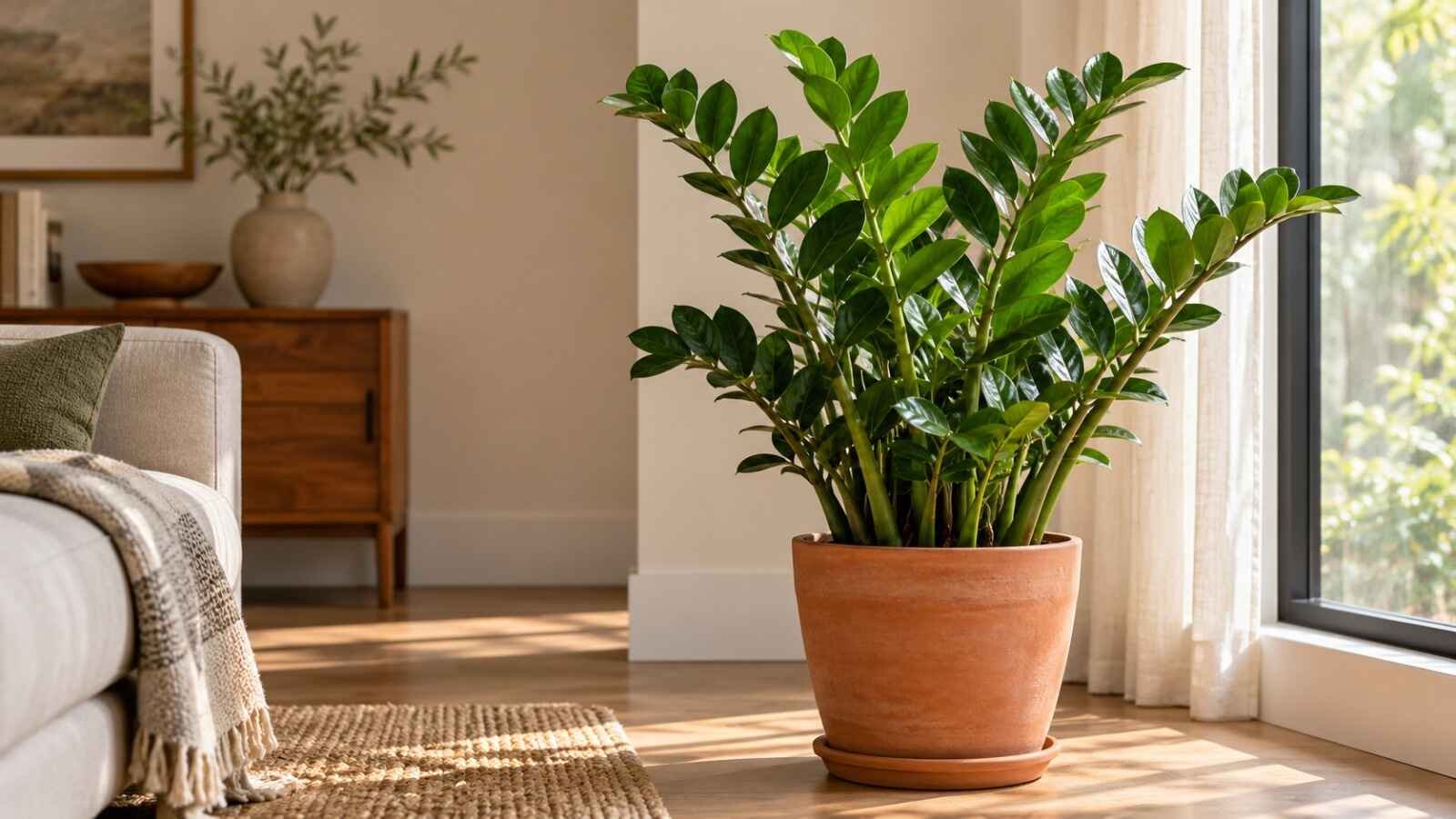
ZZ plant care at a glance
The ZZ plant (Zamioculcas zamiifolia) is a slow-growing, evergreen houseplant known for its upright stems, glossy leaflets, and thick underground rhizomes. Those rhizomes store water, which helps the plant tolerate dry periods. It also tolerates low indoor light, although bright, indirect light generally supports faster, healthier growth.
What is a ZZ plant?
The ZZ plant is a tropical perennial in the arum family, Araceae. Its accepted botanical name is Zamioculcas zamiifolia. Kew recognizes the name at species rank. The plant is native to parts of eastern and southern Africa, including Kenya, Malawi, Mozambique, Tanzania, Zimbabwe, and KwaZulu-Natal.
You may also see it sold as Zanzibar gem, eternity plant, aroid palm, emerald palm, or Zuzu plant. Its thick leaf stalks grow from underground rhizomes, giving the plant an upright shape. The rhizomes store water, but that does not mean the plant can live in complete darkness or in constantly wet soil.
ZZ plant light requirements
ZZ plants tolerate low light better than many houseplants, so they can work in an office, bedroom, or hallway with indirect daylight. For stronger growth, place the plant near a bright window where sunlight is filtered. Avoid harsh, direct sun, which can scorch or brown the leaves. Clemson Extension notes that ZZ plants survive low-light conditions but grow faster with bright, indirect light.
A UF/IFAS interiorscape study documented the plant producing new growth at 25 foot-candles for more than a year. That figure is useful evidence of low-light tolerance, not a universal minimum or recommended target for every home. Missouri Extension places low-light plants broadly in the 50–250 foot-candle category, but that is a general classification rather than a measured ZZ plant optimum.
A room with no natural light still needs supplemental grow lighting for a living ZZ plant. “Low-light tolerant” does not mean “no-light plant.”
How to water a ZZ plant
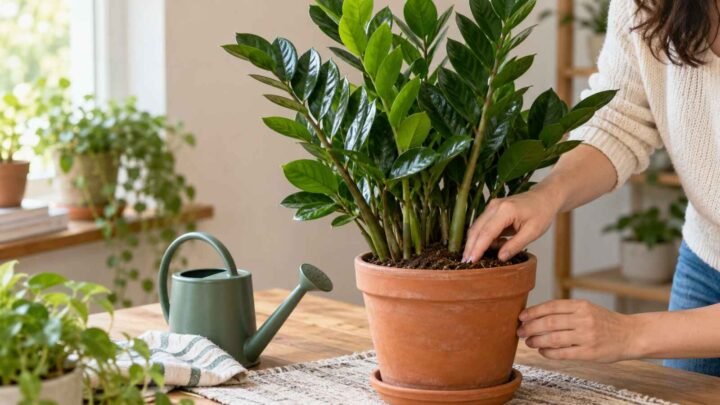
Wait until the potting mix has dried completely before watering. When it is time, water slowly and thoroughly until excess drains from the bottom of the pot. Empty the saucer or decorative outer pot so the rhizomes and roots are not left in standing water.
Clemson Extension lists one or two waterings per month as a quick reference, but the actual interval changes with pot size, potting mix, temperature, and available light. A ZZ plant in a dim, cool room may take longer to dry than one in a brighter, warmer spot. Check the soil instead of watering by weekday.
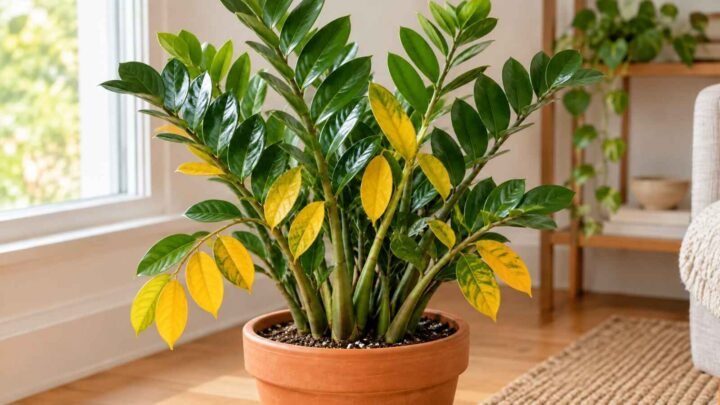
Overwatering is a common problem. Persistently wet mix can lead to root rot. If leaves yellow while the soil stays wet, review the watering and drainage conditions; a single yellow leaf by itself does not prove the cause.
Best soil and pot for a ZZ plant
Choose an airy, coarse potting mix that drains freely. Clemson Extension gives one example: 50% peat- or coir-based potting mix, 25% perlite, and 25% sand. Use coarse horticultural sand if following that blend. A pot with drainage holes matters more than following one exact recipe, and the plant should not sit in water after watering.
Explore ZZ Plant Guides
Read focused articles on ZZ Plant care, common questions, and problems.
Temperature, humidity, and fertilizer
Normal indoor humidity is generally suitable. Keep the plant warm and protect it from cold drafts; Clemson Extension advises keeping ZZ plants above 60°F. Because the plant grows slowly, it needs little fertilizer. Clemson recommends a balanced fertilizer once or twice during the growing season.
Growth, mature size, and popular varieties
A mature ZZ plant commonly reaches about 2–4 feet tall and 2–4 feet wide, although the plant’s age, growing conditions, and cultivar affect its final size. It grows slowly, sometimes putting out several new stems in a short period and then pausing.
Popular forms include the standard green ZZ plant, ‘Raven’ with foliage that matures to a very dark purple-black, variegated forms, and the compact ‘Zenzi’. Clemson Extension notes that ZZ plants rarely flower indoors; their inflorescence consists of a spadix surrounded by a spathe.
Propagating a ZZ plant
ZZ plants can be propagated by dividing the rhizomes or by taking leaf cuttings. Division separates an established plant into smaller sections, each with rhizomes and growing points. Leaf propagation is possible too, but it is a slower route: the leaflet must form a rhizome and roots before new shoots develop. UF/IFAS describes both methods for ZZ production.
Common ZZ plant problems
- Yellow leaves with persistently wet soil: Check drainage and watering first; overwatering can lead to root rot.
- Slow or little new growth: ZZ plants grow slowly by nature, and low light can slow growth further.
- Scorched or browned foliage: Move the plant away from harsh direct sun.
- Black spots on stems: Clemson Extension identifies black stem spots as normal for a ZZ plant.
- Pests: Serious pest problems are uncommon, though scale insects can occur.
This video demonstrates overwatering as one possible cause of yellow leaves. Check the plant’s soil, light, and other symptoms before assuming it is the only cause.
Is the ZZ plant toxic to cats and dogs?
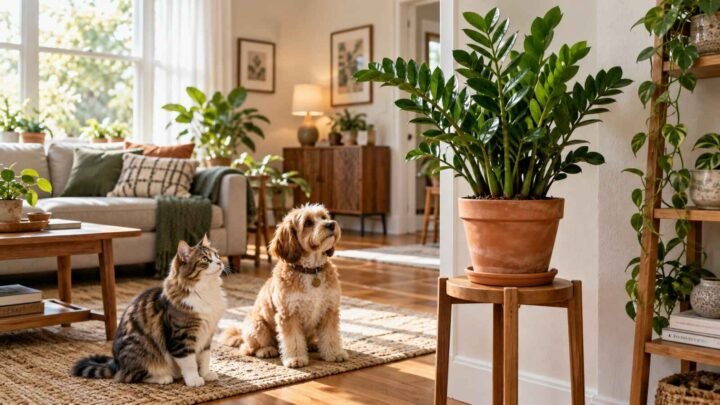
Yes. The ZZ plant is not pet-safe if chewed or ingested. ASPCA identifies ZZ plants among plants containing insoluble calcium oxalates. These needle-shaped crystals can irritate the mouth and digestive tract and may cause pain, drooling, retching, nausea, vomiting, or diarrhea. ASPCA says significant throat swelling and breathing difficulty are rare and associated with larger exposures. Keep the plant away from pets that chew foliage; contact a veterinarian or poison-control service if ingestion is suspected.
Frequently asked questions
How often should I water a ZZ plant?
Water only after the potting mix has dried completely. One or two waterings a month is a broad reference from Clemson Extension, not a fixed schedule for every home.
Can a ZZ plant grow in low light?
Yes. It tolerates low light, but bright, indirect light generally supports faster growth. It still needs light; a windowless room requires supplemental grow lighting.
Is a ZZ plant toxic to cats?
Yes. Chewing or ingesting it can expose a cat to insoluble calcium oxalate crystals. Keep it out of reach and seek veterinary advice if ingestion is suspected.
Can I keep a ZZ plant in a bathroom?
Only if the bathroom gets enough daylight or has supplemental grow lighting. A windowless bathroom without a plant light is not a suitable long-term location.
Why is my ZZ plant yellowing?
Yellowing can have more than one cause. Check whether the mix is staying wet, whether the pot drains, and whether the plant is receiving suitable light. Avoid diagnosing the problem from one symptom alone.