

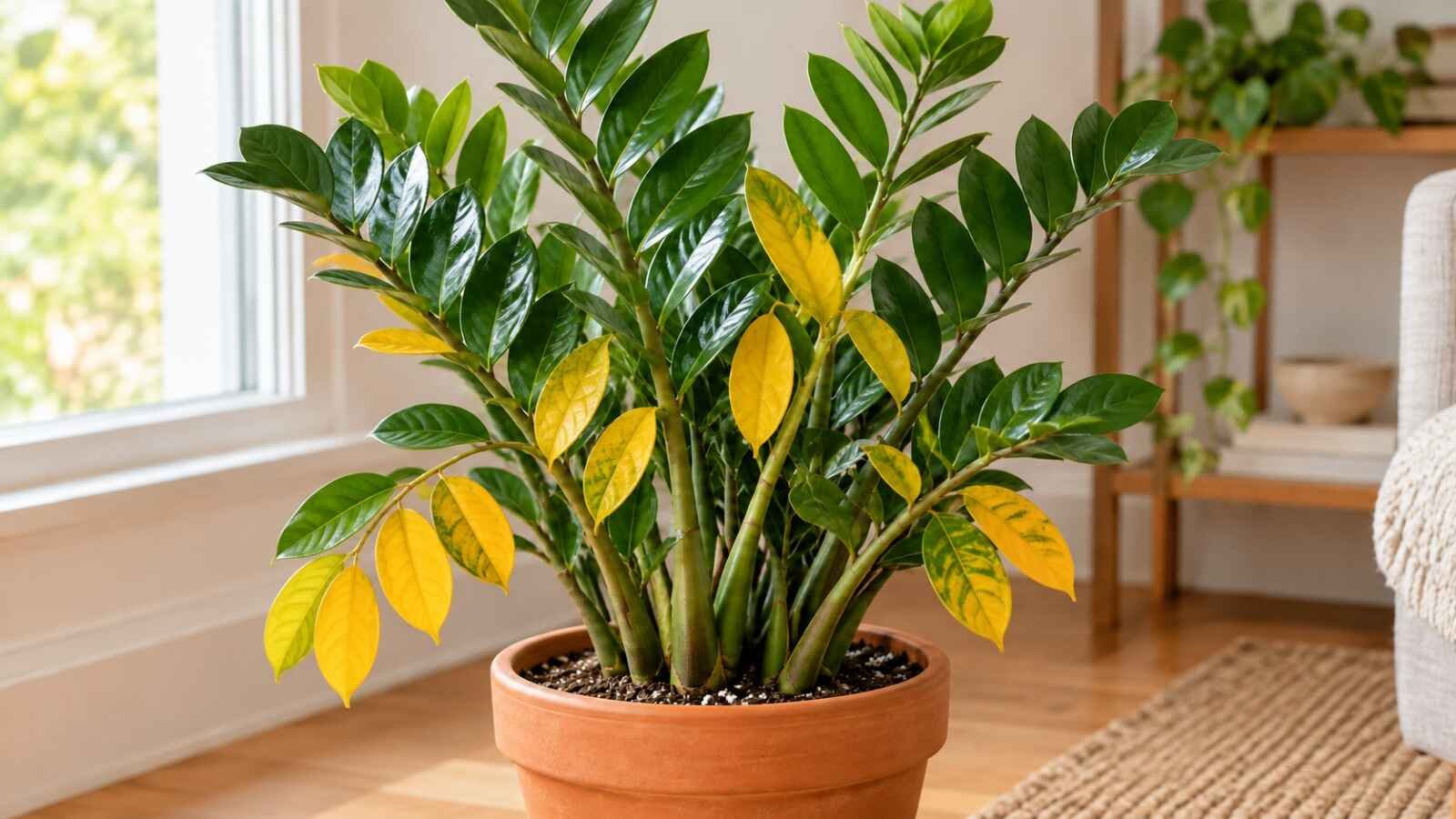
Yellow leaves on a ZZ plant can be worrying, especially when the rest of its glossy foliage still looks healthy. The color alone, though, does not identify the cause. Check how many leaves are changing, whether the potting mix is staying wet or has dried out, and whether anything recently changed in the plant’s light or location.
Persistent wet soil and poor drainage deserve an early check because ZZ plants store water in underground rhizomes. University of Connecticut Extension’s ZZ plant factsheet lists yellow leaves and rotting rhizomes among signs of overwatering. But one yellow leaflet is not proof that the plant has been overwatered—and adding water or fertilizer without checking can make the problem harder to diagnose.
Quick answer
If several lower or inner leaves are yellowing and the mix remains damp, inspect watering and drainage first. If only one of the oldest leaves is changing while the rest of the plant stays firm, monitor it before changing the whole care routine. Bleached patches after a move into direct sun, fine stippling or webbing, and white fertilizer crust point toward different checks.
Common causes of yellow leaves on a ZZ plant
| What you notice | What it may point to | Check first |
|---|---|---|
| Several lower or inner leaves yellow; mix stays wet | Excess moisture, poor drainage, or root/rhizome trouble | Check moisture deeper in the pot, drainage holes, and standing water |
| One older leaf gradually yellows; the rest remain firm | Normal aging is possible | Watch whether yellowing spreads to newer leaves or other leaf stalks |
| Pale or bleached patches on the window-facing side after a move | Too much direct sun or a sudden light change | Look for a recent move into stronger sun |
| Mix is dry well below the surface; leaves look limp or shriveled | A prolonged dry spell may be contributing | Check the root-zone mix and pot weight before watering |
| Fine speckling, webbing, cottony white clusters, or raised bumps | Spider mites, mealybugs, or scale may be present | Inspect leaflet undersides, leaf joints, and stems |
| White crust on the mix or pot, especially after frequent feeding | Fertilizer or mineral-salt buildup may be stressing roots | Review recent feeding and whether water drains freely |
These clues help prioritize checks; they are not a diagnosis by themselves. University of Maryland Extension’s yellow-leaf overview explains that yellowing can reflect environmental stress, root problems, insects, or other growing conditions, and that symptom patterns and progression matter.
1. The potting mix stays wet
Overwatering is a common starting point when ZZ plant leaves turn yellow, particularly if several lower or inner leaves are affected. University of Maryland Extension’s guidance on overwatered indoor plants explains that excess moisture can reduce oxygen around roots and cause yellowing or wilting in lower and inner foliage. A pot without drainage, a decorative cachepot holding runoff, dense mix, or frequent watering can keep the root zone wet long after the surface looks dry.
On ZZ plants, prolonged wetness can also damage the water-storing rhizomes. Check the mix below the surface, lift the pot to compare its weight with a dry pot, and empty any water collected in a saucer or outer pot. Do not water again just because a leaf has turned yellow. Wait until the mix has dried as described in the ZZ Plant profile, then water thoroughly and let excess drain.
If the mix has stayed wet for a long time and multiple leaf stalks are declining, inspect the root zone. Healthy roots are generally firm; dark, soft roots or rhizomes are a stronger warning sign than leaf color alone. Avoid disturbing the plant for one isolated yellow leaflet when the mix and remaining foliage look normal.
2. One older leaf is aging
A single older leaf can yellow as the plant replaces older growth. A University of Maryland Extension HGIC response about ZZ plants notes that older leaves naturally yellow and fall, and that low light can speed up the shedding of older leaves. This is more plausible when the change is gradual, the rest of the plant is firm, the potting mix behaves normally, and no new leaves are following it. It is less reassuring when several leaves yellow in a short period, the base feels soft, or the mix remains wet.
Mark the date or take a photo and watch the plant for a week or two. A slow change limited to one older leaf calls for observation; a spreading pattern calls for a closer check of water, light, temperature, and pests.
3. A sudden change in light or temperature
ZZ plants tolerate lower indoor light, but bright, indirect light usually supports stronger growth. Extended low light may slow growth and can contribute to older leaves shedding sooner. In contrast, harsh direct sun can bleach or scorch exposed foliage, especially after a plant is moved close to a sunny window without time to adjust.
Look for pale or whitened patches on the side facing the window, followed by dry brown areas. Move the plant to bright, indirect light and avoid another abrupt change. Clemson Cooperative Extension advises keeping ZZ plants out of full sun and above 60°F; also check for a cold window, exterior door, or heating vent if the yellowing began after a seasonal move.
4. The plant has been dry for too long
ZZ rhizomes store water, so the plant is more tolerant of dry periods than many houseplants. Still, a pot that is dry all the way through for an extended period can stress the foliage. The pot may feel unusually light, the mix may have pulled away from the sides, and leaflets may look limp or shriveled.
Check moisture below the surface before watering. If the root-zone mix is genuinely dry, water slowly and thoroughly until water exits the drainage holes, then empty the saucer. If the mix is still damp, do not treat yellowing alone as a sign that the plant needs more water.
5. Pests are feeding on the leaves
Inspect both sides of the leaflets, the joints where leaflets meet the central stalk, and the plant’s base. Fine pale stippling or delicate webbing can suggest spider mites. Cottony white material can indicate mealybugs, while raised brown or black bumps can be scale. Mealybug feeding can yellow foliage, and other pests can create similar discoloration.
If you find pests, move the plant away from nearby houseplants and identify the insect before choosing a treatment. Follow the product label if using a pesticide, and check the plant again because control may require more than one round. See University of Maryland Extension’s mealybug guidance for identification and management details.
6. Fertilizer or mineral salts have built up
ZZ plants grow slowly and do not need frequent feeding. White crust on the potting mix or container, recent heavy fertilizing, or brown leaf edges alongside yellowing can make salt buildup worth checking. Do not respond by adding more fertilizer: excessive soluble salts can injure roots and contribute to leaf symptoms.
Pause feeding while you check the mix, drainage, and watering pattern. If the pot is already waterlogged, flushing it with more water is not the right first move. Correct the drainage problem first; for suspected salt buildup, follow an extension recommendation that fits the potting mix and the plant’s current condition.
How to identify the cause: a five-step check
- Describe the pattern. Is one leaflet yellow, one whole upright leaf, or are several leaves changing? Note whether the change is gradual or spreading quickly.
- Check moisture below the surface. Feel the mix several inches down or use a clean wooden skewer. A dry surface does not prove that the bottom of a large pot is dry.
- Check drainage. Confirm that the pot has open drainage holes, remove standing water, and make sure the pot is not sitting inside a water-filled cachepot.
- Inspect the plant and its recent history. Look for soft or dark roots only when wet soil or a soft base makes that check relevant. Inspect for pests, and note recent changes in sun, room temperature, or fertilizer.
- Change one condition at a time. Take a dated photo, make the correction that best matches the evidence, and watch for new yellowing. Changing water, light, soil, and fertilizer all at once makes it difficult to tell what helped.
If several symptoms are present, the Plant Problem Checker can help you compare observations and decide what to investigate next. Its results are clues, not a confirmed diagnosis.
What to do after you find the likely cause
- Wet mix or standing water: Stop adding water for now, empty the saucer or outer pot, and confirm that the container drains. If roots or rhizomes are soft and dark, remove damaged tissue with a clean tool and repot any healthy remainder into fresh, free-draining mix. If little healthy tissue remains, ask a local Extension office whether recovery is realistic.
- Direct-sun damage: Move the plant out of harsh direct sun to bright, indirect light. Keep the new location stable instead of moving it repeatedly.
- A genuinely dry root zone: Water thoroughly once, allow runoff to drain, then return to checking the mix rather than following a fixed weekday schedule.
- Pests: Isolate the plant, remove visible pests where practical, and use only a treatment labeled for the plant and pest. Follow every label direction.
- One older leaf only: Leave healthy foliage in place and monitor. Once a leaf is fully yellow or collapsing, it can be removed with clean scissors; pruning does not correct the underlying cause.
- Possible salt buildup: Stop fertilizing temporarily and address drainage before considering any soil flush or repotting.
Do not repot, fertilize, or water solely because one leaflet has changed color. Start with the condition that the visible evidence supports.
Frequently asked questions
Why are my ZZ plant leaves turning yellow?
Several causes can look similar. Check for persistently wet mix and poor drainage first, then compare the pattern with light changes, extended dryness, pests, fertilizer history, and normal aging.
Should I water a ZZ plant when its leaves turn yellow?
Only if the root-zone mix is dry. If it is damp, extra water can worsen a moisture problem. Check below the surface and confirm that excess water can drain.
Can too much sunlight make a ZZ plant yellow?
Yes. Strong direct sun can bleach or scorch exposed leaves. Yellowing or pale patches that appeared after moving the plant into direct sun are a reason to reduce that exposure gradually.
Are yellow new leaves always a problem?
Not always. Clemson Extension notes that the ‘Chameleon’ cultivar produces yellow new leaves that later mature to green. Identify the cultivar and watch whether the new growth changes normally or continues to decline.
What if a pet chewed a yellow ZZ leaf?
Leaf color does not make the plant safe to chew. If a pet may have eaten any part of a ZZ plant, contact a veterinarian or pet-poison service for case-specific advice and use our ZZ plant pet-safety guide. Do not wait for this plant-care article to assess an animal exposure.