

A ZZ plant does not need water on a strict weekly schedule. Its thick underground rhizomes store water, so it can tolerate dry periods. The bigger risk is usually potting mix that stays wet for too long.
For most indoor ZZ plants, wait until the mix has dried through much of the root zone, then water thoroughly and let the excess drain away. Clemson Extension gives one to two waterings a month as a general reference when the potting medium has completely dried. The New York Botanical Garden advises reducing water in winter, when growth slows. Treat those intervals as starting points—not a calendar to follow regardless of your room or pot.
If you are new to the plant, see our ZZ plant profile for its other care requirements.
How often should you water a ZZ plant?
There is no single interval that works for every home. A ZZ plant in a warm, bright room and a small pot may dry faster than one in a cool, dim spot or a large container. The potting mix and drainage also affect how long moisture remains around the roots.
A practical starting point is to check the soil regularly and water only when it has dried substantially through the root zone. Under typical indoor conditions, some care references suggest watering about once or twice a month. In winter, a ZZ plant may need less; the New York Botanical Garden gives about once a month as a seasonal reference. Your plant’s soil condition matters more than either number.
| Indoor condition | How to adjust |
|---|---|
| Warmer room or brighter indirect light | Check the potting mix more often. Water only after it has dried sufficiently. |
| Cooler or dimmer winter conditions | The mix may stay moist longer, so allow more time between waterings. |
| Large pot or moisture-retentive mix | Check below the surface; the top can dry before the lower mix. |
| Pot without drainage | Move the plant to a pot with drainage holes so excess water can escape. |
These are ways to adjust your checks, not a substitute for checking the mix. A fixed “every Sunday” routine can lead to overwatering when the soil is still damp.
How to tell when a ZZ plant needs water
A dry-looking surface alone is not enough to decide. The upper layer can dry while the soil lower in the pot remains moist.
Use a few clues together:
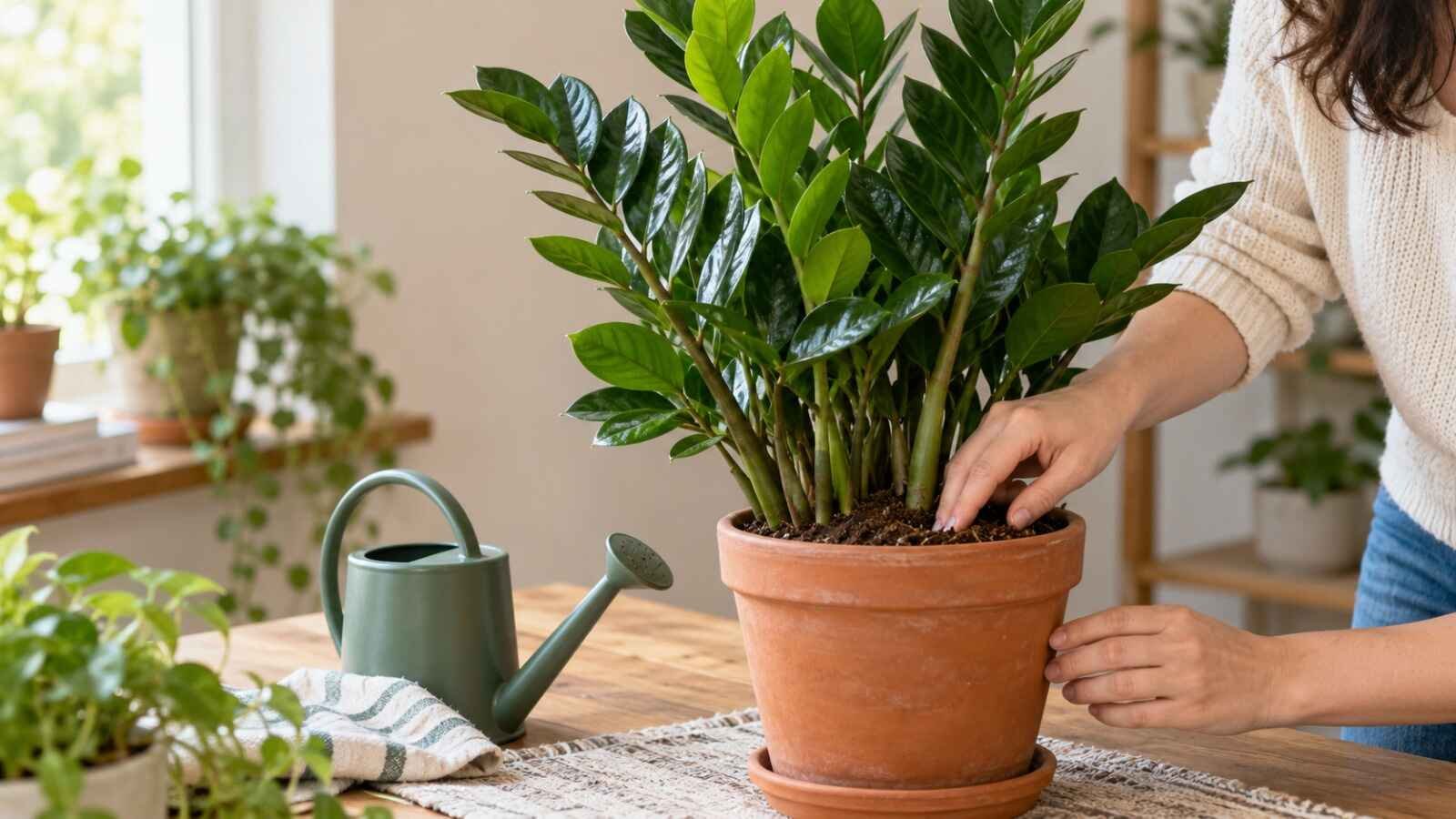
- Check below the surface. Feel the mix about an inch down, or as far as you can comfortably check without disturbing the roots. For a ZZ plant, wait until the mix is dry through much of the root zone rather than watering just because the surface feels dry. Clemson Extension describes checking the mix by touch; it also notes that pot weight and soil color can help.
- Lift the pot. A pot with dry mix often feels noticeably lighter than one that has recently been watered. Learning the difference can make the check easier over time.
- Use a moisture meter cautiously. Treat its reading as one clue. Clemson Extension notes that meter results can vary and may be affected by the potting mix and other conditions.
- Look at the plant, but check the soil too. Drooping or leaf drop can have more than one cause. A dry mix and a light pot support the possibility that the plant needs water; symptoms alone do not prove it.
UConn Extension’s general houseplant guidance recommends checking moisture below the surface and watering thoroughly when the mix is dry. Its ZZ plant factsheet advises erring on the dry side when unsure.
How to water a ZZ plant
When the mix is ready, water the soil rather than pouring water over the leaves.
- Take the nursery pot out of its decorative outer pot, if it sits inside one. This makes it easier to check and remove runoff.
- Pour slowly and evenly over the potting mix. Continue until water begins to flow through the drainage holes. This wets the root area more thoroughly than a small splash on the surface.
- Let the pot drain completely. Give it time for excess water to run out, then empty the saucer or outer pot. The New York Botanical Garden recommends removing runoff from the dish; Clemson Extension likewise advises not leaving the plant sitting in water.
- Return the pot to its usual spot. Wait until the mix has dried sufficiently before watering again.
If very dry mix pulls away from the sides of the pot, water may run down the gap without soaking the root area. Apply water slowly in two passes, allowing a few minutes between them. UConn’s houseplant watering guidance also describes briefly soaking a pot when very dry mix resists rewetting; if you use that approach, let the pot drain fully afterward.
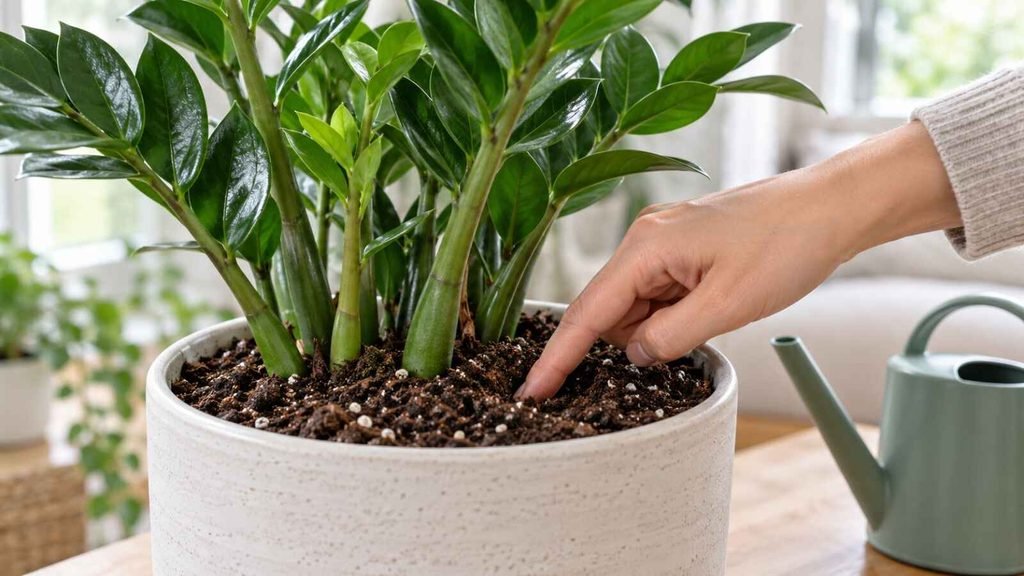
Check below the surface before watering, then let excess water drain from the pot.
What changes how quickly the soil dries?
A watering interval can change as the room and plant change:
- Light: A plant receiving brighter indirect light may use water faster than one growing in a dimmer location.
- Season and indoor conditions: Growth often slows in lower-light winter conditions, so the mix may take longer to dry. A warm room or nearby heat source can change how quickly pots dry, so check the soil rather than assuming every winter is the same.
- Pot size and drainage: A large pot can hold more mix and moisture around a small root system. Drainage holes let extra water leave; without them, wet mix can persist.
- Potting mix: A coarse, well-draining mix dries differently from dense, compacted soil. Clemson Extension recommends a coarse mix for ZZ plants, while UF/IFAS Extension also emphasizes well-drained soil.
- Plant size and root system: As a plant grows, its root system and water use change. Recheck your routine after repotting rather than carrying over the old interval automatically.
Signs of overwatering and underwatering
Possible signs of overwatering
A mix that remains wet for a long time is a stronger warning than one yellow leaf by itself. UConn lists yellow leaves and rotting rhizomes among signs associated with overwatering. UF/IFAS notes that root rot can occur when a ZZ plant stays in poorly drained conditions with excess water.
If the soil is still wet, do not add more water to “help” yellowing leaves. Check that the pot has drainage holes and that no water is trapped in the saucer or outer pot. Yellow leaves can have other causes, too; use our ZZ plant leaves turning yellow guide to assess the other clues.
Possible signs of underwatering
ZZ plants tolerate dry periods, so a missed watering does not automatically mean the plant is in trouble. During prolonged drought, leaflets or parts of the leaf stalk may drop. UF/IFAS describes this response as part of the plant’s drought tolerance.
If the mix is dry through the pot and the plant is also losing firmness or dropping leaflets, water it thoroughly and let it drain. If the mix is already wet, investigate drainage and root condition instead of watering again.
Common ZZ plant watering mistakes
- Watering by the calendar: A weekly routine can keep the mix wet when the plant is not using much water.
- Giving frequent small splashes: Light surface watering may not wet the root area evenly. When watering is due, water thoroughly and drain.
- Leaving runoff in the outer pot: Standing water keeps the base of the root ball wet.
- Judging only by the top layer: The surface may dry before the lower mix.
- Treating every yellow leaf as a watering signal: Check soil moisture and drainage before changing your routine.
Frequently asked questions
How many times a month should I water a ZZ plant?
There is no universal monthly number. Clemson Extension gives one to two waterings a month as a general reference after the mix has dried completely; the New York Botanical Garden recommends reducing watering in winter, with about once a month as a guide. Check your own potting mix before watering.
Can I water my ZZ plant every week?
Only water if the mix has dried sufficiently. A weekly schedule may be too frequent for a ZZ plant in a cool or dim room, especially in a large pot or moisture-retentive mix.
Should the soil dry out completely between waterings?
Care sources use slightly different wording: Clemson Extension and the New York Botanical Garden say to let the mix dry completely, while UConn advises allowing it to dry and erring on the dry side. For a typical indoor ZZ plant, avoid watering while the root area is still wet. Do not use visible wilting as your watering timer.
Should I water less in winter?
Often, yes, if lower light and slower growth mean the mix takes longer to dry. But indoor conditions vary. Check the pot before watering, especially if your home stays warm through winter.
Do ZZ plants need a pot with drainage holes?
Yes. Drainage lets excess water escape and makes it easier to avoid keeping the root area saturated. Empty the saucer or decorative outer pot after watering.
The simple rule to remember
When deciding how often to water a ZZ plant, check the mix—not the calendar. Let it dry substantially through the root area, water evenly until excess runs out, and empty any standing water. A flexible routine based on the plant’s actual conditions is more dependable than a fixed weekly schedule.