

Compare cactus mix with regular potting soil, choose a practical source-backed blend, and set up a pot that drains well.
The best soil for a snake plant is an airy, free-draining container mix in a pot with drainage holes. A bagged cactus mix is the easy choice, and regular indoor potting mix can work too if it drains and dries between waterings. No single recipe suits every room, pot and bag, so this guide shows how to choose a mix, how to fix one that stays wet, and how to set up the pot.
Snake plants are forgiving, but roots that stay wet can rot. The goal isn’t a bone-dry mix. It should hold a little moisture, let the excess drain, and let air return to the roots. For the bigger picture, see our snake plant care profile. Soil and watering work together, so our guide on how often to water a snake plant shows how to check the mix before you water.
What soil does a snake plant need?
Several trusted sources agree on the basics:
- The NC State Extension Plant Toolbox says well-drained soil and careful watering are a must, because the roots will rot if the plant is overwatered.
- Penn State Extension advises a cactus potting mix or one with perlite.
- The Royal Horticultural Society recommends a free-draining cactus compost.
- Illinois Extension says to plant snake plants in regular potting mix and let the soil dry completely between waterings.
Mix structure matters. Clemson Extension notes that heavy, fine-textured mixes with a lot of peat hold more moisture than loose, porous blends of bark, sand and perlite.
“Free-draining” doesn’t mean water races past the roots without wetting anything. It means water moves through the pot and out the drainage holes, and the mix can lose its excess moisture between waterings.
Cactus mix or regular potting soil for a snake plant?
Both can work. What matters is how the mix behaves in your pot.
| Soil option | Best for | What to check |
|---|---|---|
| Bagged cactus or succulent mix | A convenient, ready-to-use starting point. | Formulas vary by brand. Choose a mix that drains well and dries between waterings in your home. |
| Regular indoor potting mix | Using potting mix you already have. Illinois Extension recommends it for snake plants . | If the mix feels dense or stays wet for too long, add perlite to improve drainage or switch to a faster-draining mix. |
If your current mix drains well and the plant is growing, you don’t need to change it. If it stays soggy, improve its structure before you reach for a different plant-care trick.
Skip garden soil. Illinois Extension says garden soil alone won’t drain well enough in a pot, and Clemson Extension notes that garden soil is generally not recommended for containers unless it has been sterilized and amended.
Snake plant soil mix recipes from trusted sources
None of these is proven best for every home. They’re published starting points.
| Recipe | Source | Notes |
|---|---|---|
| Cactus or succulent mix, straight from the bag |
Penn State Extension Royal Horticultural Society (RHS) |
The easiest option. Check that it drains well and dries between waterings in your home. |
| 3 parts houseplant potting mix + 1 part perlite |
Costa Farms U.S. commercial grower |
Perlite adds air space to a heavier mix. |
| 2 parts peat or coir + 1 part perlite + 1 part coarse sand | Clemson Extension | A general foliage-plant mix. Clemson lists Sansevieria among the plants it suits, but this is not a snake-plant-only formula. |
| 2 parts peat-free loam-based compost + 1 part horticultural grit or fine gravel | Royal Horticultural Society (RHS) | A UK-published formula with ingredients that differ from the cactus-mix and perlite options above. |
For the Clemson blend, about 1 quart is 2 cups peat or coir, 1 cup perlite and 1 cup coarse sand. If you swap in coconut coir, rinse it thoroughly first to avoid salt problems, as Clemson advises.
Which amendments improve drainage?
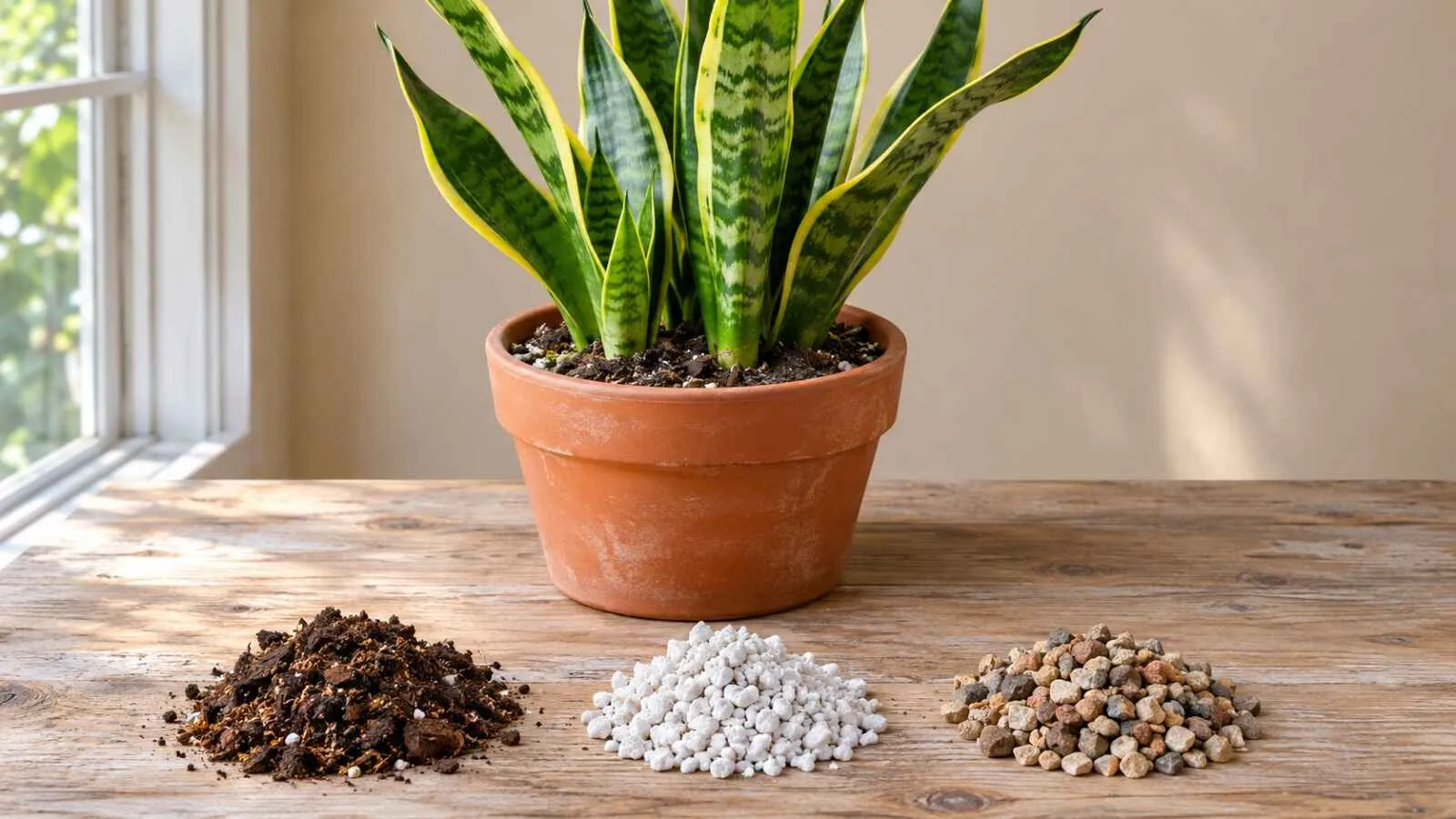
Perlite, coarse sand and horticultural grit are the ingredients named in the sources above. They make a mix less dense and help water move through. Buy products sold for horticultural use and mix them evenly through the whole potting medium, rather than layering them.
Do drainage holes matter?
Yes. A free-draining mix can’t make up for a pot that traps water. Use a container with open drainage holes, let the excess drain after watering, and empty the saucer or outer pot. The RHS advises pouring away water that collects there so the plant doesn’t sit in it.
Skip the gravel layer at the bottom. Illinois Extension calls it a myth that Illinois Extension explains why a gravel layer is a drainage myth, because water gathers in the soil just above the gravel. If you use a nursery pot inside a decorative outer pot, remove the inner pot after watering and empty any runoff from the outer pot. Make sure the inner pot never sits in collected water.
Related care guides for Snake Plant Care: Light, Water, Soil & Pet Safety
Choose a pot that fits the rootball
A pot much larger than the rootball holds extra mix that stays wet. The RHS advises a pot only slightly larger than the old one to avoid overpotting, and Illinois Extension’s houseplant guide says to move up one size, which means a pot 1 to 2 inches wider.
Material and weight matter too. Porous clay pots lose moisture through their sides faster than plastic or glazed pots, Clemson explains. Penn State Extension adds that taller varieties do best in heavier pots because the leaves can topple the plant, and that a badly rootbound plant can break a clay pot.
If you prefer a decorative pot without holes, keep the snake plant in a draining nursery pot inside it. Take the inner pot out to water, let it drain, then put it back.
When and how to repot a snake plant
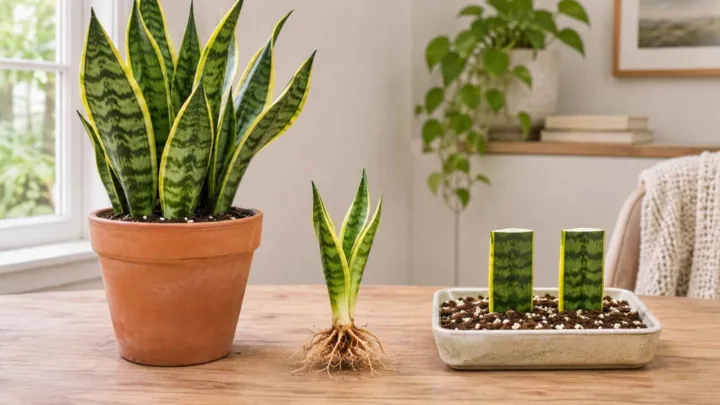
Don’t repot on a fixed schedule. The RHS says newly bought snake plants are generally happy in their original container for the first few years, and need repotting once roots and leaves fill the pot or it begins to buckle. Repot sooner if the mix stays waterlogged or the pot has no drainage holes.
- Choose a pot with drainage holes that is only a little larger than the current one.
- Add enough fresh mix that the rootball will sit at its previous depth.
- Set the plant in place and fill around the roots, keeping the leaf bases at their original level.
- Press the mix gently so the plant is stable, without packing it hard.
- Water to settle the mix, let the excess drain, and empty the saucer.
Snake plant sap can irritate skin, so the RHS advises gloves when handling cut leaves. The plant is also toxic to pets; the ASPCA lists snake plant as toxic to cats and dogs, so keep trimmings and spilled mix out of reach. For symptoms and what to do, see our Snake Plant Pet-Safety guide.
If you see soft, mushy tissue at the base or damaged roots, treat that as a plant-health problem. A soil change alone may not fix it.
How to tell whether your soil mix is working
There’s no universal number of days for a snake plant pot to dry. Clemson lists the plant, pot size and type, mix and conditions as factors that affect how often indoor plants need water. Check the mix before you water instead of following a weekly schedule. Our watering guide covers how to check soil moisture.
If the mix stays damp below the surface for a long time, check for blocked drainage holes, an oversized pot or a moisture-retentive mix. Yellow or curling leaves don’t prove the soil is the cause, so look at the whole plant before changing several things at once. Our Snake Plant Leaves Curling guide walks through the other common causes.
Common snake plant soil mistakes
- Using garden soil in a pot. Use a bagged indoor mix instead.
- Choosing a pot without drainage holes. Use one with holes, or keep the plant in a removable nursery pot.
- Putting gravel at the bottom of the pot. It doesn’t solve drainage; use a better mix instead.
- Jumping to a much bigger pot. The extra mix stays wet around the roots.
- Assuming every cactus mix is the same. Compare ingredients and texture.
Frequently asked questions
What is the best soil mix for a snake plant?
A free-draining mix in a pot with drainage holes. Bagged cactus mix is convenient, and regular potting mix can also work if it drains. See the recipe table above for published blends.
Can I use cactus soil straight from the bag?
Yes, it’s a reasonable starting point. Water thoroughly when the plant needs it and check that the mix dries between waterings.
Can I use ordinary potting soil without adding anything?
Often, yes. Illinois Extension recommends regular potting mix for snake plants. If yours stays wet, add perlite or switch mixes.
Should I put rocks or gravel in the bottom of the pot?
No. Illinois Extension calls this a myth. Use a pot with drainage holes and a well-draining mix instead.
Does snake plant soil need a special pH?
The NC State Plant Toolbox lists snake plants under neutral and alkaline soil categories and stresses good drainage. For a typical houseplant setup, focus on the mix and drainage rather than a precise pH.
How often should I replace the soil?
There’s no strict schedule. Repot when the plant outgrows its container, the pot begins to buckle, or the mix has become compacted or persistently waterlogged.
The takeaway
For most growers, start with a free-draining cactus mix, or a regular potting mix that drains well. If your mix stays wet, amend it with perlite or switch, and don’t rely on rocks at the bottom of the pot. Use drainage holes, avoid an oversized container, and check the soil before you water.