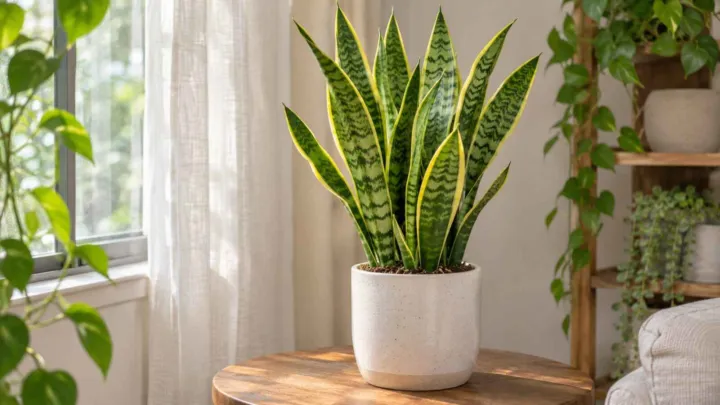


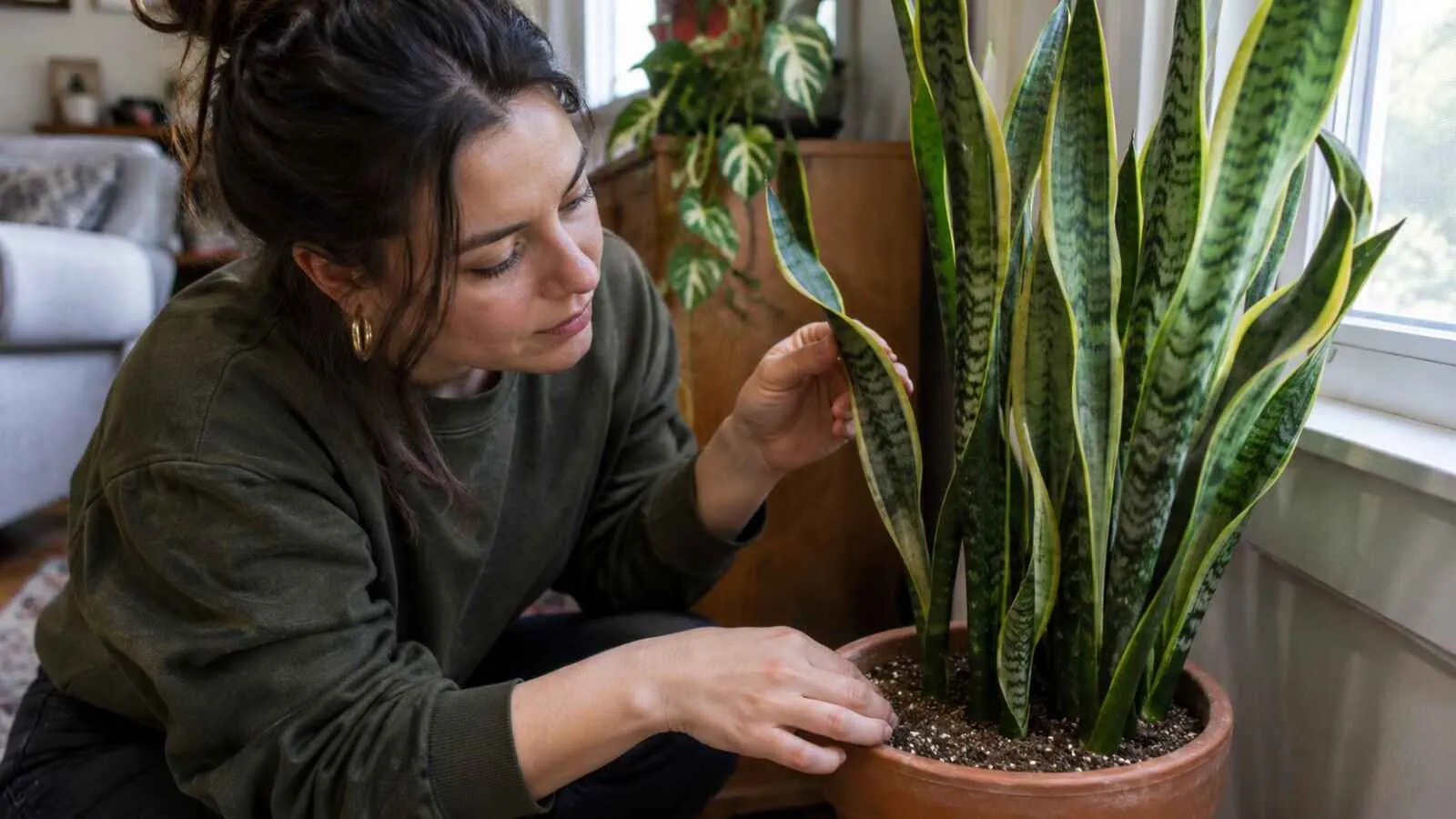
Snake plant leaves curling can look alarming, because these plants are supposed to stand tall and stiff. Before you reach for the watering can, though, keep one thing in mind: curling is a symptom, not a diagnosis. Chronic underwatering can cause leaf curling, while overwatering may damage roots and make a plant wilt even when the soil is wet. Pests can distort new growth, and cold or intense sun may cause other leaf damage, so look for matching signs before linking them to a curl.
The fastest way to sort it out is to check three things in order: the potting mix deep in the pot, the leaf bases and undersides, and anything that changed recently. A move, a cold snap, or the start of heating season all count. This guide shows you how to do that, then walks through each cause and the fix that goes with it. For everyday upkeep, our snake plant care guide covers the basics.
Quick diagnosis: what are the leaves and soil telling you?
| What you notice | Most likely cause | First move |
|---|---|---|
| Leaves look thin or wrinkled, the pot feels light, and the mix is dry well below the surface | Underwatering (cause 1) | Water thoroughly and let the pot drain. |
| Leaves curl while the mix stays wet; lower leaves yellow or the base feels soft | Root stress from overwatering or poor drainage (cause 2) | Stop watering, check drainage, and inspect the roots if the decline continues. |
| Curling or blotchy leaves after time near a cold window, a drafty door, or a porch | Cold stress (cause 3) | Move to a warmer, steadier spot. |
| Curling started after a move into strong sun, or the window side looks pale or scorched | Sun or heat stress (cause 4) | Pull back from hot glass and adjust gradually. |
| Distorted new growth, sticky residue, cottony clusters in the leaf bases, silvery scars, or black specks | Thrips, mealybugs, or mites (cause 5) | Isolate the plant and inspect folds and undersides. |
| The pot dries out much faster than it used to, roots circle or push up, or there is a white crust on the soil | Cramped roots or mineral buildup (cause 6) | Check the root ball and flush the mix. |
| One leaf is bent or twisted, but the rest of the plant and its new growth look healthy | Physical damage or a naturally twisted cultivar (cause 7) | Leave it alone and watch new growth. |
No single clue proves a cause. Clemson Extension’s watering factsheet points out that overwatering and underwatering can look alike, and that any root injury can make a plant wilt even when the soil is wet. So confirm with at least two signs before you change your routine.
1. The mix is bone dry (underwatering)
A snake plant stores water in its thick leaves and handles dry spells better than most houseplants. That doesn’t mean it never gets thirsty. Clemson’s houseplant disorders factsheet lists chronic underwatering among the causes of wilting and leaf curling. On a snake plant, thirst usually looks like leaves that are thinner, slightly wrinkled, or less firm than normal.
Signs it’s thirsty
- The pot feels noticeably light when you lift it.
- The mix is dry deep down, not just on top. Push a wooden skewer or chopstick to the bottom of the pot. If the skewer comes out dry near its lower end, the mix around that depth may be dry. Check the pot’s weight and the mix in another spot before deciding to water.
- The leaves feel thin and a little limp rather than soft and mushy.
- The plant sits in a warm, bright spot or a small clay pot, where mix dries faster.
How to fix it
Water slowly until it runs out of the drainage holes, then empty the saucer. If the mix has shrunk away from the pot or the water runs straight through, Clemson suggests the double-watering method: water once, wait about half an hour, then water again and let the pot drain completely. Use room-temperature water. Clemson recommends water between 62 and 72°F and advises against softened water.
After that, let the mix, not the calendar, tell you when to water next. Pot size, soil, light, temperature, and season all change how fast a pot dries. Our guide on how often to water a snake plant shows how to check moisture without a fixed schedule.
2. Wet soil or damaged roots (overwatering and root rot)
Curling doesn’t always mean thirst. Roots need oxygen as well as water. When the mix stays soggy, roots can start to die, and damaged roots can’t supply the leaves. The plant ends up looking dehydrated even though the pot is damp, and more water only makes it worse. Clemson’s factsheet specifically notes that snake plants are prone to rotting from overwatering, and the NC State Extension snake plant profile says well-drained soil and careful watering are a must.
Signs of root trouble
- The mix stays wet for an unusually long time, or water sits in a saucer or decorative outer pot.
- Several leaves are yellowing, drooping, or going soft near the base.
- The plant keeps declining even though the soil is damp.
- If you look at the roots, UC IPM describes healthy roots as white (at least under their outer covering) and says brownish to blackish roots, especially at the tips, often point to rot.
How to fix it
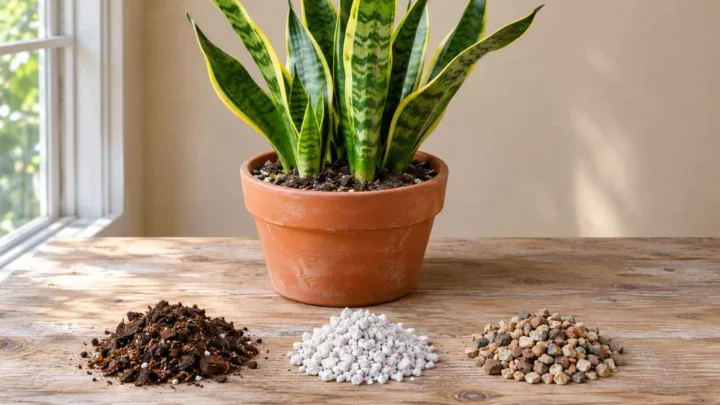
Stop watering while the mix is still wet, and make sure the pot has open drainage holes and nothing trapping water underneath. If the plant keeps declining or the base feels soft, slide it out of the pot and look. Cut away only the roots that are clearly dark and mushy, using clean scissors, then repot into a clean container with fresh, fast-draining mix. Clemson’s guidance is that when only a few roots are infected, you can cut them out and repot in sterile soil. Let the plant settle into barely damp mix rather than soaking it right away.
If most of the roots and the base have rotted, recovery is unlikely. You may be able to salvage a firm, healthy section, but expect to start small. On the other hand, if the roots are firm and the plant isn’t declining, leave it alone. Repeatedly digging up a healthy plant causes its own stress.
Overwatering can become more likely in winter, when growth slows. NC State gives one to two months as a broad winter reference, not a fixed schedule; check the mix and the pot’s conditions before watering. For help telling rot from simple dryness, see our guide to snake plant root rot.
3. Cold air, drafts, or a chilly windowsill
Snake plants are tropical. NC State says they tolerate cool temperatures around 50°F, and UC IPM lists chilling injury below 50°F among the causes of leaf blemishes on houseplants. UC IPM identifies chilling injury below 50°F as a possible cause of leaf blemishes, but these sources do not establish curling alone as a snake-plant cold-injury symptom. Consider cold exposure when curling appears with matching leaf damage after a cold spell.
This one catches a lot of people in late fall. A plant that spent the summer on a porch comes inside, a sill gets cold at night, or a heating vent starts blowing across the leaves.
How to fix it
Move the plant away from cold glass, exterior doors, and the path of vents. Keep conditions steady, and don’t swing it between warm and cold spots. Leaves that were already damaged usually won’t flatten back out, so judge recovery by what the new growth looks like.
4. Too much sun or heat, too fast
Snake plants tolerate very low light, and NC State suggests direct sun for only part of the day, roughly 2 to 6 hours. A plant that moves from a dim corner to a hot, sunny window can get more light and heat than its leaves are ready for. UC IPM lists excess light (sunburn) after a recent move as a cause of leaf blemishes, and notes that wilting is usually caused by underwatering or too much light.
Look for timing. Did the curl start soon after you moved the plant or the season changed? Are there bleached, tan, or scorched patches on the side facing the window? If so, pull the plant back from hot glass or filter the light with a sheer curtain, and let it adjust gradually. A bright, hot spot also dries the pot faster, so check the mix before you decide whether this is a light problem or a water problem. Our snake plant light guide can help you pick a stable spot.
5. Pests: thrips, mealybugs, and mites
Pests are less common than watering problems, but they’re worth ruling out, especially when the curl shows up on new growth. North Carolina State Extension advises monitoring snake plants for mealybugs and spider mites. UC IPM also lists thrips among pests of Dracaena, the genus that includes snake plants.
How to inspect
- Check both sides of every leaf, and look closely at the leaf bases and tight folds, where pests hide.
- Thrips can leave pale or silvery scars and shiny black specks of waste. See UC IPM’s thrips pest note for identification tips.
- Mealybugs look like small, cottony or waxy white clusters, often tucked into crevices. UC IPM’s mealybug pest note explains what to look for.
- Spider mites cause fine stippling and sometimes webbing, and they’re often found on leaf undersides. The spider mite pest note has more detail.
- Sticky residue is a clue too. Sap-feeding insects excrete honeydew, which can also attract ants.
Aphids can also curl and distort leaves on many houseplants, so include them in the inspection, especially on new growth and the undersides of leaves.
How to treat them
Isolate the plant right away, and identify the pest before you choose a treatment. UC IPM says some soft-bodied insects and mites can be removed by washing the plant with water. For a small mealybug problem, it describes dabbing 70% isopropyl (rubbing) alcohol directly on the insects with a cotton swab. Test it on a small patch a day or two ahead, and keep it away from flames because it’s flammable. If you need an insecticidal soap or horticultural oil, choose one labeled for your plant and the pest you identified, and follow the label exactly. UC IPM treats pesticides as a last resort. Don’t spray just because leaves are curling, since curling alone doesn’t prove there are pests.
One safety note: NC State lists snake plant as toxic to cats, dogs, and people if eaten, and says the sap can irritate skin. Wear gloves when you cut or handle damaged leaves, and keep treated plants out of reach of pets.
Related care guides for Snake Plant Care: Light, Water, Soil & Pet Safety
6. Cramped roots or mineral buildup
Snake plants don’t mind being snug in their pots, so don’t repot them just because you feel like it. A pot-bound plant may wilt because too little mix remains to hold water, but this does not establish crowded roots as a direct cause of snake-plant leaf curling. Clemson explains that a pot-bound plant has too little soil left to hold water for all those roots. Warning signs include roots circling the inside of the pot or pushing up out of the soil, and a pot that dries out far faster than it used to.
Mineral buildup can contribute to root injury and wilting, but the cited sources do not establish it as a direct cause of leaf curling. A hard white or gray crust on the soil or pot may indicate soluble salt buildup; check that it is not mold. Leach the mix only when the pot has open drainage, empty the saucer afterward, and avoid over-fertilizing.
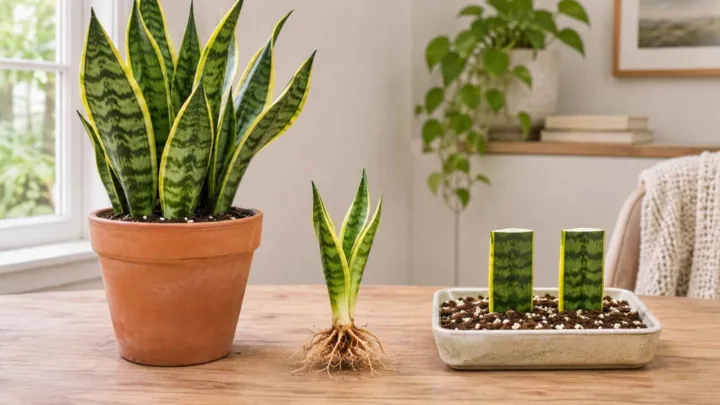
If the roots really are crowded, move up just one pot size, use fresh, free-draining mix, and make sure the new pot has drainage holes. Our guide on how to repot a snake plant walks through it step by step.
7. A twisted cultivar or a bent leaf
Some snake plants simply grow that way. NC State describes the ‘Twisted Sister’ cultivar as having a twisting leaf habit. A leaf bent during shipping, moving, or a squeeze past furniture can also hold a crease long after the cause is gone.
If the leaf is firm, the base is healthy, and new growth is upright, one curled or creased leaf isn’t a care problem. Don’t cut healthy leaves just to tidy the plant. Remove a leaf only if it’s badly damaged, collapsing, or rotting, and cut near the soil line with a clean blade.
Quick checks before you change anything
- Check the mix deep down. Use a finger or a wooden skewer to test near the bottom of the pot, and lift the pot to feel its weight.
- Check drainage. Confirm the drainage holes are open and that no water is trapped in a saucer or decorative pot.
- Look at the base and roots if the plant is declining. A soft base and dark, mushy roots point to rot. Firm, light roots don’t.
- Inspect for pests. Look in leaf folds and on undersides for insects, honeydew, stippling, silvery scars, or black specks.
- Think back over recent changes. A move into direct sun, a cold window, a heating vent, or a change in your watering all matter.
- Make one change at a time. Fix the most likely cause, keep conditions steady, and watch the next few weeks of growth.
This order helps you avoid the classic mistake of watering a plant whose roots are already struggling. It also makes it easier to tell whether your fix worked.
What not to do when snake plant leaves curl
- Don’t water automatically. Damp soil plus a declining plant points to root trouble, not thirst.
- Don’t repot over one bent leaf. Repot when there’s a reason, such as poor drainage, a mix that stays soggy, confirmed root damage, or truly crowded roots.
- Don’t fertilize as a quick fix. Fertilizer won’t repair rotted roots, pest damage, or a crease.
- Don’t mist to “uncurl” leaves. Misting doesn’t fix a dry root ball or damaged roots.
- Don’t spray for pests without evidence. Identify the problem first, and follow the product label if treatment is warranted.
- Don’t expect an old crease to vanish. Judge recovery by whether the damage stops and new leaves come in firm.
Will curled snake plant leaves uncurl?
Sometimes. A mildly curled leaf may look fuller after you correct a water problem. A leaf with a sharp bend, split, or permanent crease will usually stay that way. The better sign of recovery is that the plant stops declining and produces firm, upright new leaves. That takes weeks, not days, so keep care steady instead of stacking several changes at once.
Frequently asked questions
Why are my snake plant leaves curling inward?
The direction of the curl doesn’t reveal the cause on its own. Check whether the mix is dry or wet, whether the leaf is wrinkled or soft, and whether you see pest damage or a recent change in temperature or light. Underwatering, root stress, cold, pests, and physical damage all call for different fixes.
Can overwatering make snake plant leaves curl?
Yes, indirectly. Overwatering can damage the roots, and injured roots can’t take up water properly, so the leaves can look stressed even though the mix is wet. Look for persistent moisture, yellowing, a soft base, and dark, mushy roots before you add any water.
Can underwatering cause snake plant leaves to curl?
Yes. Clemson Extension lists chronic underwatering as a cause of wilting and leaf curling in houseplants. Confirm that the mix is dry through the root zone first, because a dry surface doesn’t tell you what’s happening at the bottom of the pot.
Why is my snake plant curling in winter?
Winter can slow the mix’s drying and expose a plant to cold windowsills or drafts. Snake plants tolerate low humidity, so dry air alone should not be presented as a confirmed cause of curled leaves. Keep the plant away from cold glass, check the mix before watering, and treat NC State’s one-to-two-month winter interval as a broad reference rather than a fixed schedule.
Should I cut off curled snake plant leaves?
Not if they’re still firm and healthy. A crease may remain, but the leaf can still do its job. Remove a leaf if it’s rotting, collapsing, or badly damaged, and use a clean blade.
Do snake plant leaves curl from low light?
Curling alone isn’t a dependable low-light sign. Snake plants tolerate low light, although brighter indirect light generally supports stronger growth. Rule out watering, roots, cold, pests, and sun exposure first, then see our snake plant light guide for placement ideas.
Should I mist a snake plant with curled leaves?
No. Misting isn’t a reliable treatment for curling. If the mix is dry, water it thoroughly and let the excess drain. If it’s wet, don’t add more water.
The bottom line
When your snake plant leaves are curling, the plant is giving you a clue, not a verdict. Check the mix deep in the pot, look at the leaf bases, and think about what changed. Then fix one thing at a time and give the plant a few weeks to show new growth. If you want a full routine to prevent problems, start with our snake plant care guide.