
Skip to content
Find a Plant

Search HousePlantTrail

Quick SearchType a plant name (e.g. ZZ, Snake, Cast-Iron) or symptom (e.g. root rot, gnats, yellowing).

Why Is My Houseplant Growing Leggy? Low-Light Signs and Fixes

By 0 Comments
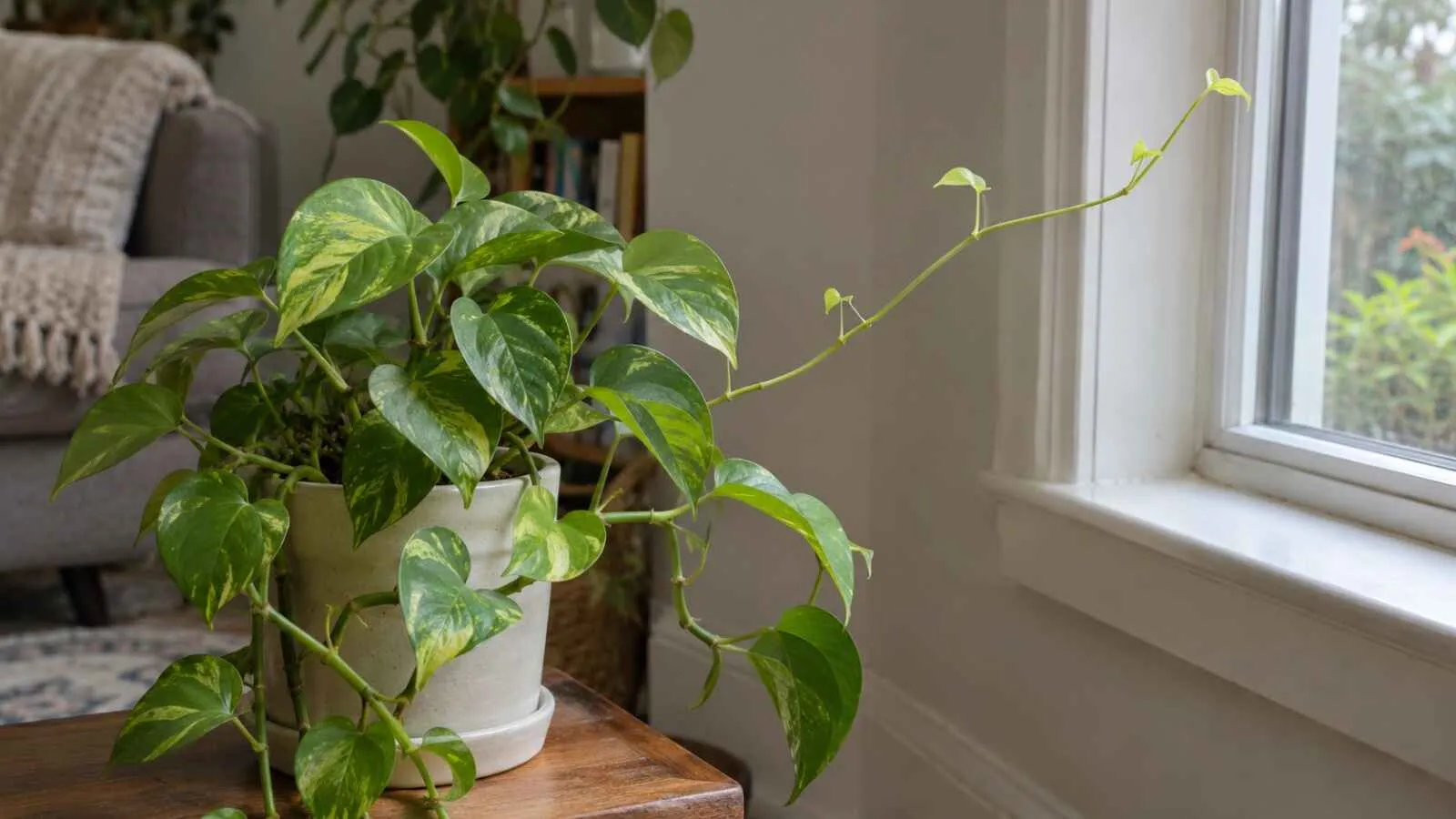
A pothos near a window with a thin, stretched shoot, long gaps between leaves, and pale new growth.
Use this as a starting point, not a diagnosis. Similar symptoms can have different causes. Check the growing conditions and cited sources; contact a local horticulture professional when a plant is rapidly declining.
Problem type
environmental
Reference level
Moderate
Scientific name
Not applicable — abiotic light-stress condition; no pathogen or species name.

Long, thin stems, wider gaps between leaves, and smaller or paler new growth can indicate that a houseplant is not receiving enough light for compact growth. The plant may also lean toward a window. These signs are common in low light, but they are not unique to one problem, so compare the plant’s new growth with its normal shape. UMN Extension

Move the plant gradually to a brighter location that suits its species. A sudden move into strong direct sun can bleach or scorch foliage. If natural light is inadequate, use a balanced plant light and follow its distance and timing instructions. University of Minnesota Extension gives 12–14 hours as a general supplemental-light period for foliage houseplants, while noting that plant and light requirements differ. UMN Extension

Avoid adding extra fertilizer to compensate for dim light; it will not correct the cause. Prune only if that species responds well to pruning—cutting back is not a universal way to make every houseplant fuller. If you have a ZZ plant or snake plant, see our guides to ZZ plant light and windowless rooms and snake plant light requirements for plant-specific placement advice.

What it can look like

New growth is unusually stretched and weak, with long gaps between leaves and smaller, paler foliage; stems may lean toward a window or other light source.

Possible causes in low light

The plant is receiving less light than it needs for compact growth. Light may be reduced by distance from the window, window direction, curtains, outdoor shade, season, or weak indoor lighting. Light needs vary by species; low-light tolerance does not mean the plant can grow well without usable light.

Affected parts

  • Stems
  • Leaves

Primary symptoms

  • New stems or shoots become longer and thinner than is typical for the plant.
  • The gaps between leaves (internodes) become unusually long.
  • New leaves may be smaller or paler than normal.
  • The plant may lean toward the brightest available light.

Other symptoms

  • Variegated foliage may lose some of its pattern or become greener.
  • Growth may slow, and flowering may decrease.
  • Older leaves may yellow or drop after prolonged insufficient light.

Step-by-step checks

  1. Check the plant’s species-specific light needs and observe whether its newest growth is thinner, paler, or more widely spaced than before.
  2. If possible, measure light at leaf level with a light meter. Phone readings can be used as rough comparisons, not precise measurements.
  3. Gradually move the plant to a brighter location suited to its species. Avoid an abrupt move into strong direct sun.
  4. If natural light is insufficient, use a balanced plant light. Follow the fixture’s distance and timing instructions; 12–14 hours is a general starting reference for foliage houseplants, not a universal prescription.
  5. Do not add extra fertilizer to compensate for low light. Resume routine feeding only as appropriate for the plant and its active growth.
  6. Prune leggy stems only when the plant species responds well to pruning. Improved light supports healthier new growth; existing stretched sections may not become compact again.
  7. Rotate the pot periodically for more even exposure; rotation does not replace adequate light.

Organic treatment options

  • Not applicable — this is an abiotic light-related condition; no pesticide or organic pest treatment is indicated.

Prevention tips

  • Choose plants whose light needs match the actual light available in the room.
  • Recheck light as seasons change and nearby trees or buildings cast shade.
  • Place the plant where it receives suitable light; do not use a fixed window-distance rule for every species.
  • Use supplemental plant lighting where natural light is insufficient, including windowless rooms.

Plants commonly affected

  • Snake Plant
  • ZZ Plant
  • Golden Pothos
  • Chinese Evergreen

Sources and further reading