
Skip to content
Find a Plant

Search HousePlantTrail

Quick SearchType a plant name (e.g. ZZ, Snake, Cast-Iron) or symptom (e.g. root rot, gnats, yellowing).

Mealybugs on Houseplants: How to Identify and Control Them

By 0 Comments
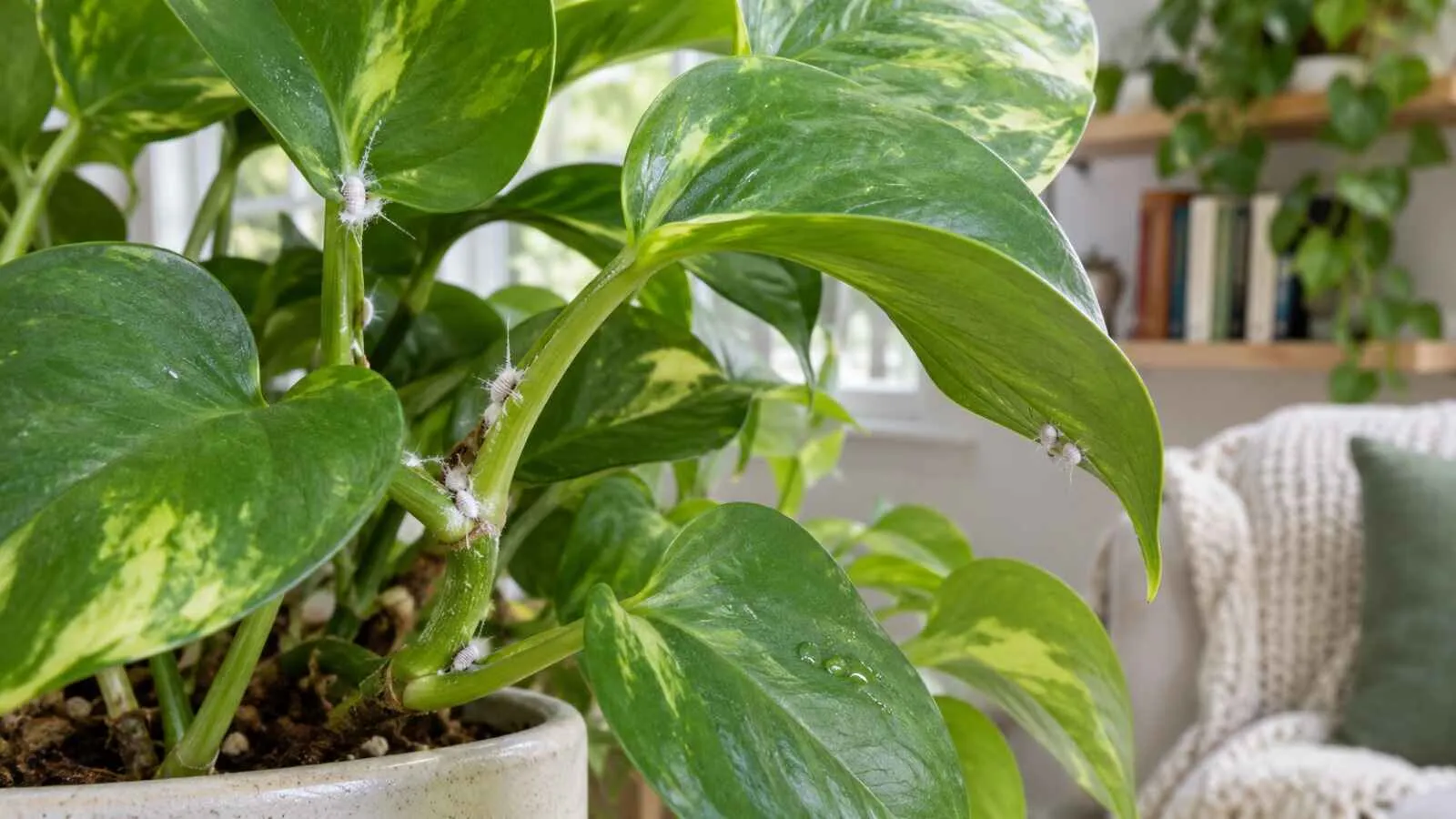
White cottony mealybugs clustered at the leaf joints and stem of a green pothos plant.
Use this as a starting point, not a diagnosis. Similar symptoms can have different causes. Check the growing conditions and cited sources; contact a local horticulture professional when a plant is rapidly declining.
Problem type
pest
Reference level
Moderate
Scientific name
Pseudococcus / Planococcus citri

Small white, cottony patches on a houseplant may be mealybugs. These soft-bodied, oval insects feed on plant sap and hide in leaf joints, along leaf undersides, and where stems meet. The white material is protective wax; cotton-like clumps may also contain eggs. Look for sticky honeydew, distorted new growth, or black sooty mold growing on the honeydew. Heavy feeding can cause yellowing, wilting, stunted growth, and leaf drop. ipm.ucanr.edu

Low light does not cause mealybugs. They often arrive on an infested plant, and indoor conditions can allow them to persist. Isolate a suspected plant and inspect nearby plants, especially leaf axils, undersides, and stem joints.

For a small infestation, remove visible insects with a damp cloth or cotton swab. A cotton swab dabbed with 70% or weaker isopropyl alcohol may help, but first test a small area and wait one to two days for possible leaf damage; alcohol is flammable. For a larger infestation, use an insecticidal soap or horticultural oil labeled for the plant and pest. These products must contact the insects, and repeat treatment should follow the product label. Severe or persistent infestations may be difficult to control; consider discarding a badly affected plant to protect others.

What it can look like

Small, slow-moving, oval-bodied insects covered in white powdery wax; waxy filaments may extend from the body. Cotton-like clusters may include egg masses. The insects are not scale insects.

Possible causes in low light

Low light does not cause mealybugs. They are often introduced on an infested plant or plant material. Mild indoor conditions and fewer natural enemies may allow an infestation to persist.

Affected parts

  • Stems
  • Leaves
  • Roots

Primary symptoms

  • White, cottony or powdery wax clusters on leaf undersides, in leaf axils, and at stem joints
  • Sticky honeydew on leaves, stems, or nearby surfaces
  • Black sooty mold growing on honeydew deposits
  • Distorted or stunted new growth

Other symptoms

  • Yellowing, wilting, or premature leaf drop when feeding is heavy
  • Ants attracted to honeydew

Step-by-step checks

  1. Isolate the affected plant and inspect nearby plants, especially leaf axils, stem joints, and leaf undersides.
  2. For a small infestation, wipe or remove visible insects with a damp cloth or cotton swab.
  3. If using isopropyl alcohol, dab it directly on individual insects using a 70% or weaker solution. Test a small area first and wait one to two days; alcohol is flammable.
  4. For a larger infestation, use an insecticidal soap or horticultural oil labeled for both the plant and mealybugs. Follow the label and test a small area before treating the whole plant.
  5. Check the plant regularly and repeat treatment only as directed on the product label.
  6. If the infestation is severe or continues despite treatment, consider discarding the plant to protect nearby houseplants.

Organic treatment options

  • Isopropyl alcohol, 70% or weaker, dabbed directly on individual mealybugs after a small-area test
  • Commercial insecticidal soap labeled for the plant and mealybugs; follow the label
  • Horticultural or neem oil product labeled for the plant and mealybugs; test first and follow the label

Prevention tips

  • Inspect new plants carefully before placing them near your collection.
  • Keep a suspected or infested plant separate until the infestation is controlled.
  • Regularly check leaf undersides, leaf axils, stem joints, and the outside of pots.
  • Check roots only when the plant continues to decline or cottony growth appears near drainage holes.

Plants commonly affected

  • Peace Lily
  • ZZ Plant
  • Chinese Evergreen
  • Pothos

Sources and further reading