

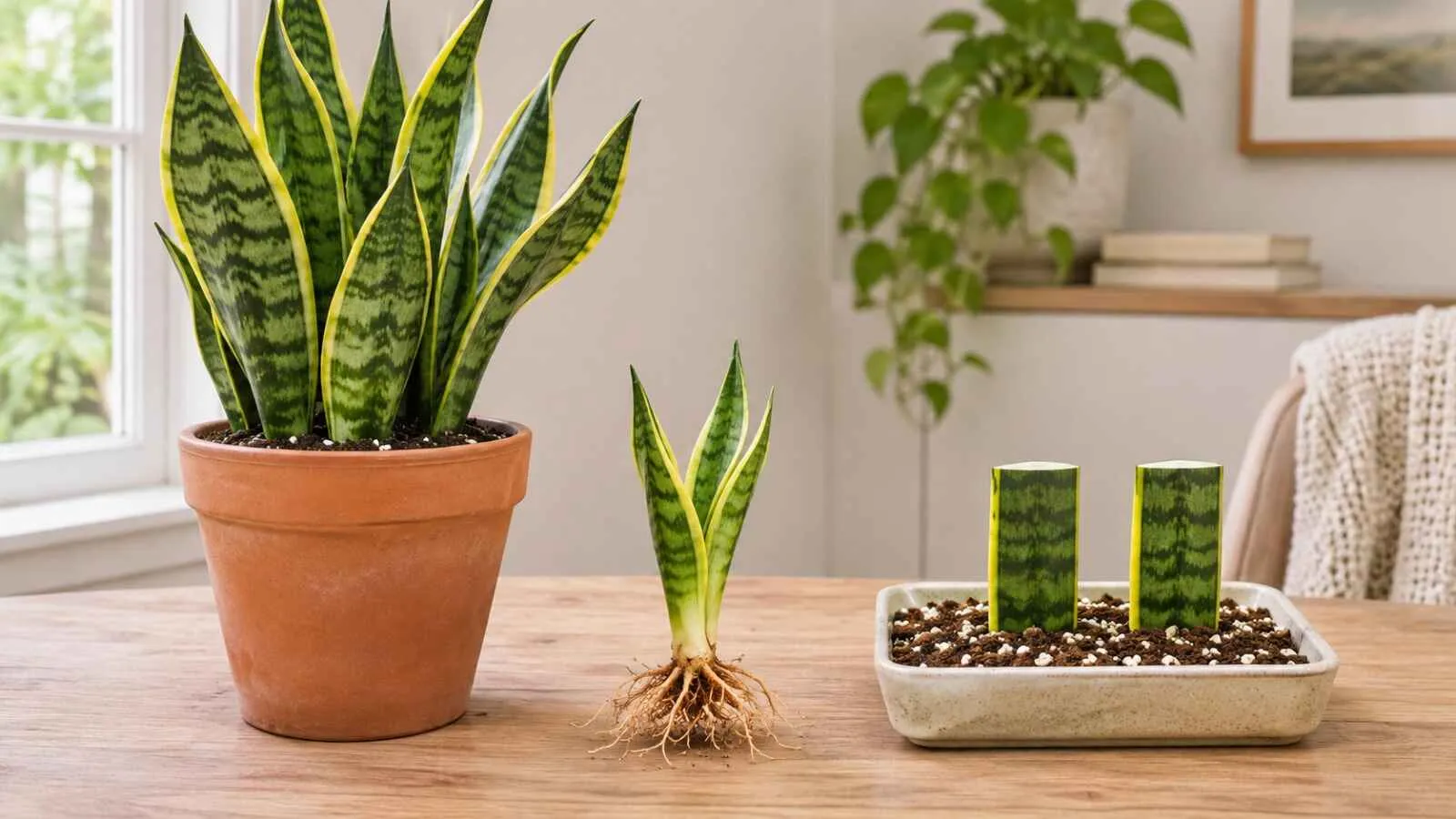
The fastest, most reliable way to propagate a snake plant is to separate a rooted pup or divide a crowded clump. Leaf cuttings work too, but new shoots take about two months to appear, and cuttings from many variegated cultivars grow back plain green.
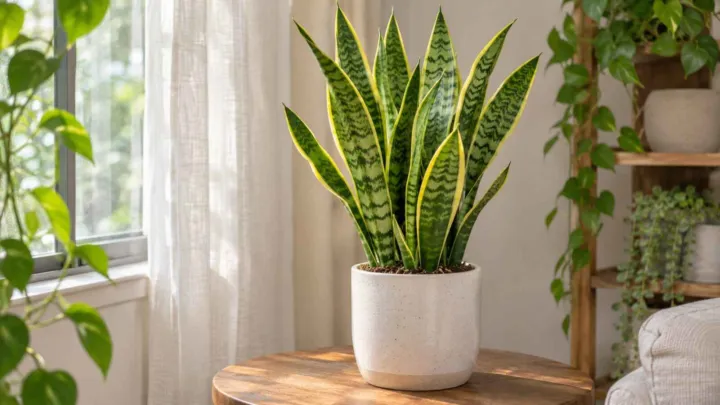
Snake plants are sold as Dracaena trifasciata, though older labels may still say Sansevieria trifasciata, according to NC State Extension. They grow in clumps, and mature plants send up small offsets called pups. You can pull those pups away, split a larger clump, or grow new plants from sections of a leaf. Which one you pick depends on what you want: speed, several new plants, or a copy that looks like the parent.
One point trips people up. A pup is the young offset, and division is how you separate it from the parent (or split a bigger clump). They are one method, not two. Penn State Extension calls division the easiest way to propagate a snake plant, with leaf cuttings as the alternative.
Which snake plant propagation method should you choose?
| Method | Best when | Speed | Keeps variegation? |
|---|---|---|---|
| Division (pups or clump) | A pup has its own roots, or the pot is crowded. | Fastest, since the roots already exist. | Yes |
| Leaf sections in a rooting mix | There is no pup, or you want several starts from one leaf. | Typically about two months to first shoots; timing varies. | Often no |
| Leaf section in water | You want to watch roots form. | Variable; water-rooted cuttings need to transition to potting mix. | Often no |
If you only remember one rule: divide when you can, and use leaf cuttings when you have to. For the plant’s everyday needs afterward, see our snake plant care guide.
What you need before you start
- A clean, sharp knife or pruners. Disinfect the blade before use and between plants to reduce the risk of spreading disease.
- A pot with drainage holes for each new plant. Iowa State Extension says divisions usually go into a pot smaller than the original.
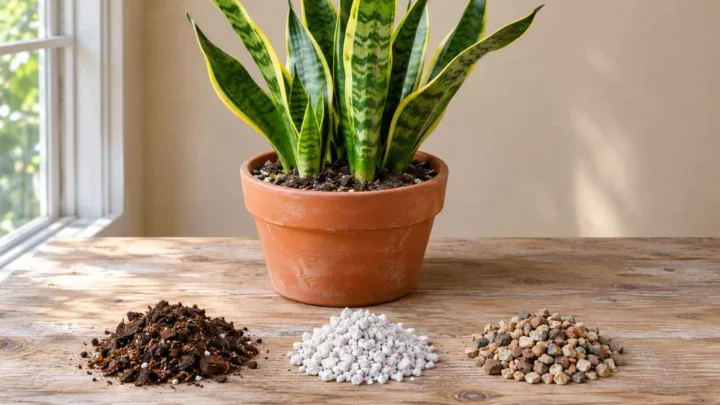
- Potting mix for divisions. Use a fast-draining mix; our guide to the best soil for snake plants has the details.
- A light rooting medium for leaf sections. The University of Maine’s houseplant bulletin recommends a soilless medium for good aeration and drainage. Perlite or a perlite-and-potting-mix blend fits that description.
- A marker or knife for notching each leaf section, so you remember which end faces up.
- A clean jar, only if you want to try water.
Rooting hormone is optional. It may help, but it won’t fix a section planted upside down or kept soggy.
Method 1: Separate a pup or divide the clump
Division is the best choice when a pup has its own roots or the clump has filled its pot. You start with a section that is already growing, so there is no waiting for a leaf to make roots from scratch. Iowa State Extension lists snake plant among the houseplants best propagated this way.
- Take the plant out of its pot. Loosen the mix by hand until you can see where the pup or clump joins the parent.
- Find a natural break. Look for the rhizome, roots, and healthy leaves that belong to the section you want.
- Separate it. If it pulls apart easily, let it. If the connection is firm, cut through the rhizome with a clean knife. Keep as many roots on each piece as you can.
- Pot each division on its own. Use a pot with drainage holes, and plant at about the same depth as before. Skip oversized pots, which hold extra wet mix around small roots.
- Water, drain, and settle it. Let the excess run out, then set it in bright, indirect light.
Size matters a little. Iowa State notes that larger pieces recover faster, while smaller pieces give you more plants. A pup that is still firmly attached and has no roots yet will settle more easily if you let it grow longer before cutting it free. Early spring is a good time to do this, ideally while you’re repotting anyway. Then hold off on fertilizer for a few weeks while the roots recover.
Method 2: Root snake plant leaf cuttings in a rooting mix
Leaf cuttings are the answer when there is no pup to separate, or when you want several new plants from one healthy leaf. They are slower than division, and the result may not match the parent’s pattern (more on that below).
- Choose a firm, healthy leaf. Cut it off near the base with a clean blade.
- Mark the direction. Before you cut the leaf into pieces, note which end sat closest to the soil. A small notch at the top of each piece works well.
- Cut the leaf into sections. Iowa State Extension suggests pieces about 3 to 4 inches tall; the University of Maine says 2 to 3 inches. Either works. Direction matters far more than length.
- Plant each piece right side up. Push the end that faced the plant’s base 1 to 2 inches into lightly moist rooting mix. The notched top stays above the surface. New roots and leaves form at the bottom end, so a piece planted upside down may never root.
- Give it warmth and bright, indirect light. Iowa State recommends air temperatures of 65 to 75°F. A heat mat that holds the medium around 75 to 80°F can help in a cool home. To raise humidity, loosely cover the pot with a clear bag or dome, keep the cover from touching the leaf, and leave an opening for air exchange.
- Keep the mix lightly moist, never wet. Snake plant leaves are thick and fleshy, and a waterlogged mix is the quickest way to rot them.
- Be patient. Shoots or plantlets typically show up at the base in about two months, according to Iowa State. Roots often form first, so don’t dig a piece up to check.
Some growers let the cut ends dry for a day or two before planting. It is optional, and the extension guides above don’t require it. If you try it, keep the pieces out of direct sun while they dry.
Once a cutting has roots and a new shoot, move it into a pot with drainage and a snake plant mix. Our snake plant soil guide explains what to use.
Method 3: Root a leaf cutting in water
Water rooting lets you watch roots appear, which is why it’s popular. A commercial growing guide from Lively Root estimates 2 to 4 months, but Extension sources do not establish a dependable timeline for snake plant cuttings rooted in water. Roots grown in water may also need time to adjust once they meet potting mix.
- Cut a healthy leaf section and mark which end faced the parent’s base.
- Stand it upright in a clean jar with only the bottom end in water. Keep the top dry.
- Change the water once or twice a week. Don’t let the level drop below the developing roots.
- Pot it when roots are about an inch long. Use a small pot with drainage and a light mix, and keep the mix lightly moist while the cutting adjusts. After that, follow the plant’s normal dry-between-waterings routine (our snake plant watering guide shows how to check).
If the plant will live in a pot anyway, rooting directly in a mix skips the water-to-soil switch. If the base of a cutting turns soft or mushy in the jar, trim off the damaged part and restart in fresh water.
Related care guides for Snake Plant Care: Light, Water, Soil & Pet Safety
Will leaf cuttings keep a snake plant’s variegation?
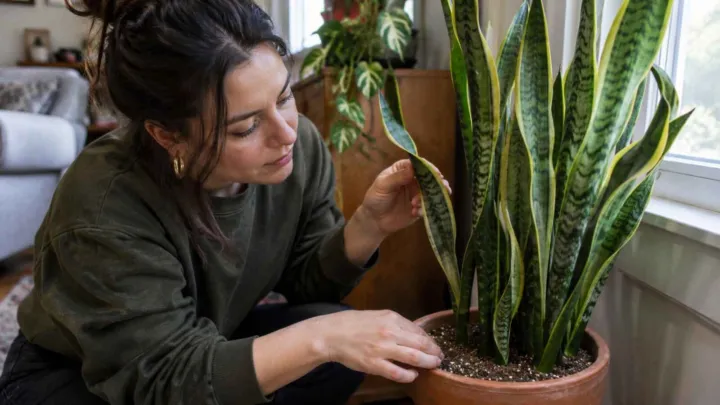
Often, no. A leaf cutting from a variegated snake plant such as ‘Laurentii’ may root fine and still grow plain green. Iowa State Extension explains that the edge pattern on these plants comes from a chimera, a mix of different tissue types, and it may not carry through a leaf section. Its advice is to propagate them by division.
So if you care about the yellow margins or silver tones, divide a rooted pup or clump. The pattern comes along because the new plant is a piece of the original.
How long does it take, and when should you start?
A division already has roots and leaves, so it mostly needs time to settle. Leaf cuttings need to build everything from scratch, and Iowa State says shoots typically appear in about two months. Treat that as a rough guide. Light, warmth, moisture, and the health of the cutting all change the pace.
Early spring is the ideal season for cuttings and division, according to Iowa State, which also says most houseplants can be propagated at other times of year. Indoors, what matters most is warmth and bright, indirect light, so avoid starting cuttings in a cold, dim spot.
Aftercare for new snake plants
- Light: Give bright, indirect light while roots and shoots develop. Snake plants tolerate low light, but young starts need enough to grow. Our snake plant light guide covers placement.
- Moisture: Keep the rooting mix lightly moist, not soggy. A wet mix can rot a cutting before it has roots.
- Drainage: Use pots with drainage holes and empty any water from the saucer.
- Watering rhythm: Skip the fixed calendar. Check the mix first, as in our watering guide.
- Fertilizer: Wait until the new plant is established. Iowa State suggests holding off for a few weeks after dividing.
Keep trimmings away from pets. The ASPCA lists snake plant as toxic to cats and dogs, with nausea, vomiting, and diarrhea among the signs. Leaf sections and separated pups are easy for a curious pet to grab, so work somewhere they can’t reach. Our snake plant pet-safety guide has more.
Common snake plant propagation problems
The cutting is soft or rotting. This usually means too much moisture, poor drainage, or a spot that’s too cool. Cut away the rotted part, restart in a fresh container with an airy medium, and stop keeping the mix constantly wet.
Nothing is happening. First check that the original base end points down. A section planted upside down may not root. Then check for bright, indirect light and a warm spot. If the section is still firm, give it more time instead of disturbing it every few days.
The new growth is plain green. That’s a normal result when you root a leaf from a variegated cultivar, and it doesn’t mean the cutting is unhealthy. Use division next time if you want to keep the pattern.
The leaf section looks wrinkled. It may be losing moisture faster than its young roots can replace it. Keep it out of direct sun and make sure the medium isn’t bone dry, but don’t answer wrinkles with heavy watering.
If leaves on an established plant start curling instead, our guide to snake plant leaves curling helps you sort out the cause before you change anything.
Frequently asked questions
Can you propagate a snake plant from one leaf?
Yes. Cut a healthy leaf into sections and root them in a light medium, planting the original base end down. One leaf can give you several sections.
What is the fastest way to propagate a snake plant?
Separating a rooted pup or dividing a clump. The new plant already has roots and leaves, while a leaf section has to grow both.
Is soil or water better for snake plant cuttings?
A rooting mix is the more direct route if the plant will live in a pot. Water lets you see the roots, but water-grown roots may need time to adjust after potting.
Can I propagate a variegated snake plant from a leaf?
You can root it, but the new growth may come out plain green. Division is the dependable way to keep the pattern.
Can you grow a snake plant from seed?
It’s rarely practical. NC State Extension notes that snake plants rarely flower indoors, so most home growers never see seed.
When is the best time to propagate a snake plant?
Early spring is ideal, but Iowa State says most houseplants can be propagated at other times too. Provide warmth and bright, indirect light.
Do I need rooting hormone?
No. If you use it, follow the label, and don’t let it stand in for correct orientation, drainage, and moisture.
The takeaway
To get a new snake plant quickly, separate a rooted pup or divide a crowded clump. Use leaf sections when there is no pup, mark which end is up, and expect to wait about two months. Water rooting is fine if you enjoy watching roots, but a rooting mix skips the transition. And for a variegated cultivar, division is the way to keep the parent’s pattern.