


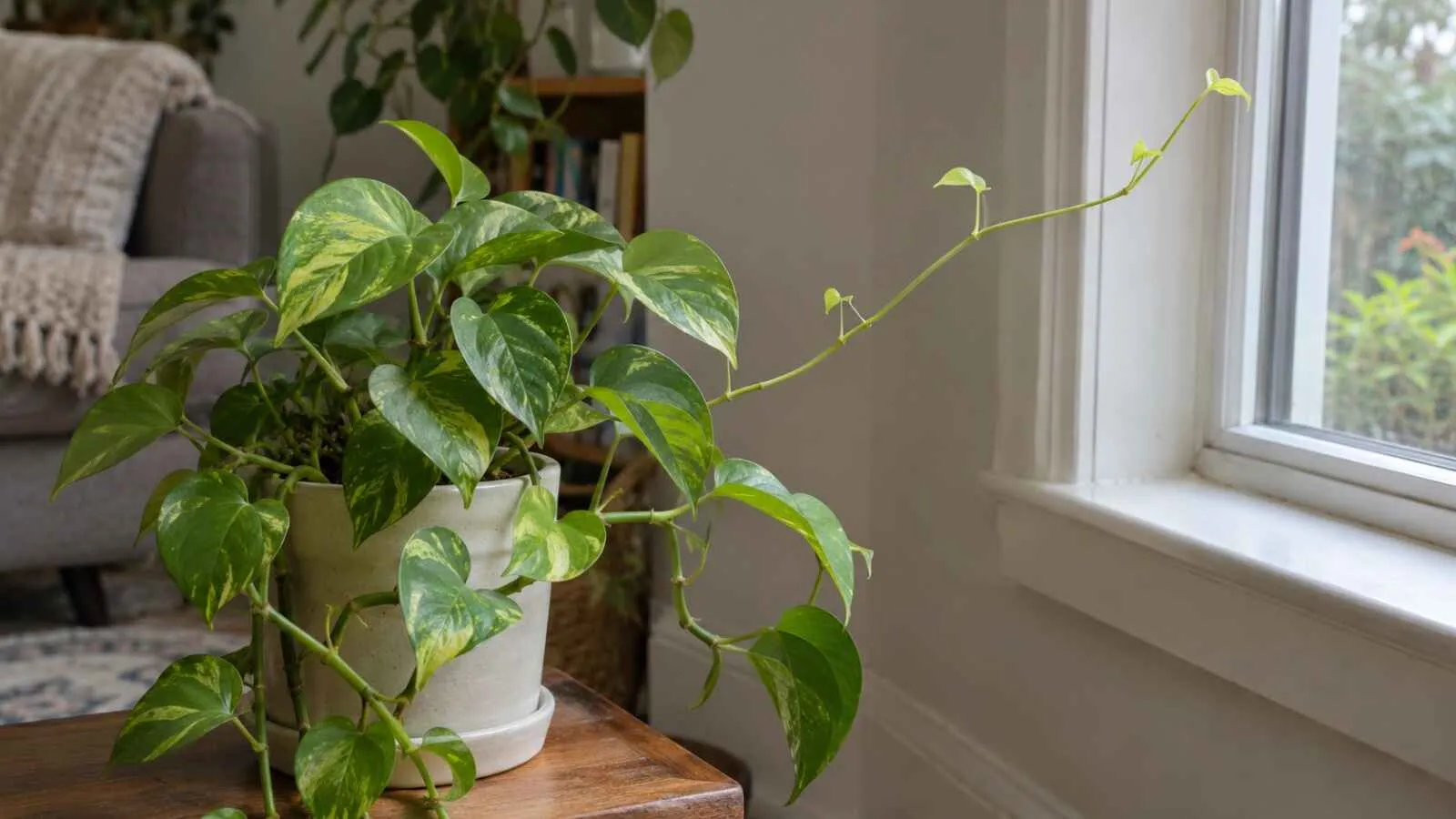
Long, thin stems, wider gaps between leaves, and smaller or paler new growth can indicate that a houseplant is not receiving enough light for compact growth. The plant may also lean toward a window. These signs are common in low light, but they are not unique to one problem, so compare the plant’s new growth with its normal shape. UMN Extension
Move the plant gradually to a brighter location that suits its species. A sudden move into strong direct sun can bleach or scorch foliage. If natural light is inadequate, use a balanced plant light and follow its distance and timing instructions. University of Minnesota Extension gives 12–14 hours as a general supplemental-light period for foliage houseplants, while noting that plant and light requirements differ. UMN Extension
Avoid adding extra fertilizer to compensate for dim light; it will not correct the cause. Prune only if that species responds well to pruning—cutting back is not a universal way to make every houseplant fuller. If you have a ZZ plant or snake plant, see our guides to ZZ plant light and windowless rooms and snake plant light requirements for plant-specific placement advice.