

A soil-first guide to checking moisture, adjusting for the seasons, and avoiding overwatering.
How often to water a snake plant is one of the most common houseplant questions, and the honest answer is that the pot decides, not the calendar. Snake plants store water in thick leaves and tolerate dry spells well, so the usual way to lose one is watering too soon, not too late. This guide shows how to check the soil, how to water, and how the seasons change your routine. For general care, see our snake plant care profile.
Quick answer: how often should you water a snake plant?
- Check the soil first. Illinois Extension’s snake plant profile says to let the soil dry completely between waterings.
- Winter is the slow season. The NC State Extension Plant Toolbox suggests watering only every one to two months in winter. Illinois says to give just enough to keep the leaves from shriveling.
- Don’t follow a fixed summer schedule. Light, room temperature, pot size, and potting mix all affect how quickly the soil dries. Check the mix before watering; Clemson Extension’s indoor plant watering guide explains why watering needs vary.
- Too much water is the main risk. Illinois calls overwatering the main reason snake plants fail, and Clemson Extension explains that soggy soil cuts off the oxygen roots need.
What decides your watering interval?
Clemson says there is no pat answer to how often to water indoor plants. It depends on the plant, its growth stage, its location, the pot and the mix. Illinois Extension’s watering guide lists the same factors and adds light, temperature, humidity and drainage.
| Condition | What it means for watering |
|---|---|
| Brighter light or a warmer room | The mix dries faster, so check more often. Still wait until it has dried. |
| Dimmer light or cooler weather | The plant uses water slowly and the mix stays wet longer. Stretch the time between checks. |
| Large pot or dense, moisture-holding mix | The lower soil can stay damp after the surface feels dry. Check deeper. |
| Unglazed clay pot | Clay is porous and dries faster than plastic or glazed pots, according to Clemson and Illinois. |
| No drainage hole, or water left in an outer pot | Water collects around the roots. Use a draining inner pot and empty standing water. |
Clemson also notes that a plant needs less water while it is dormant or slowing down.
How to tell when a snake plant needs water
The soil is the most reliable signal. Leaf symptoms are late and easy to misread, because too much and too little water can look alike.
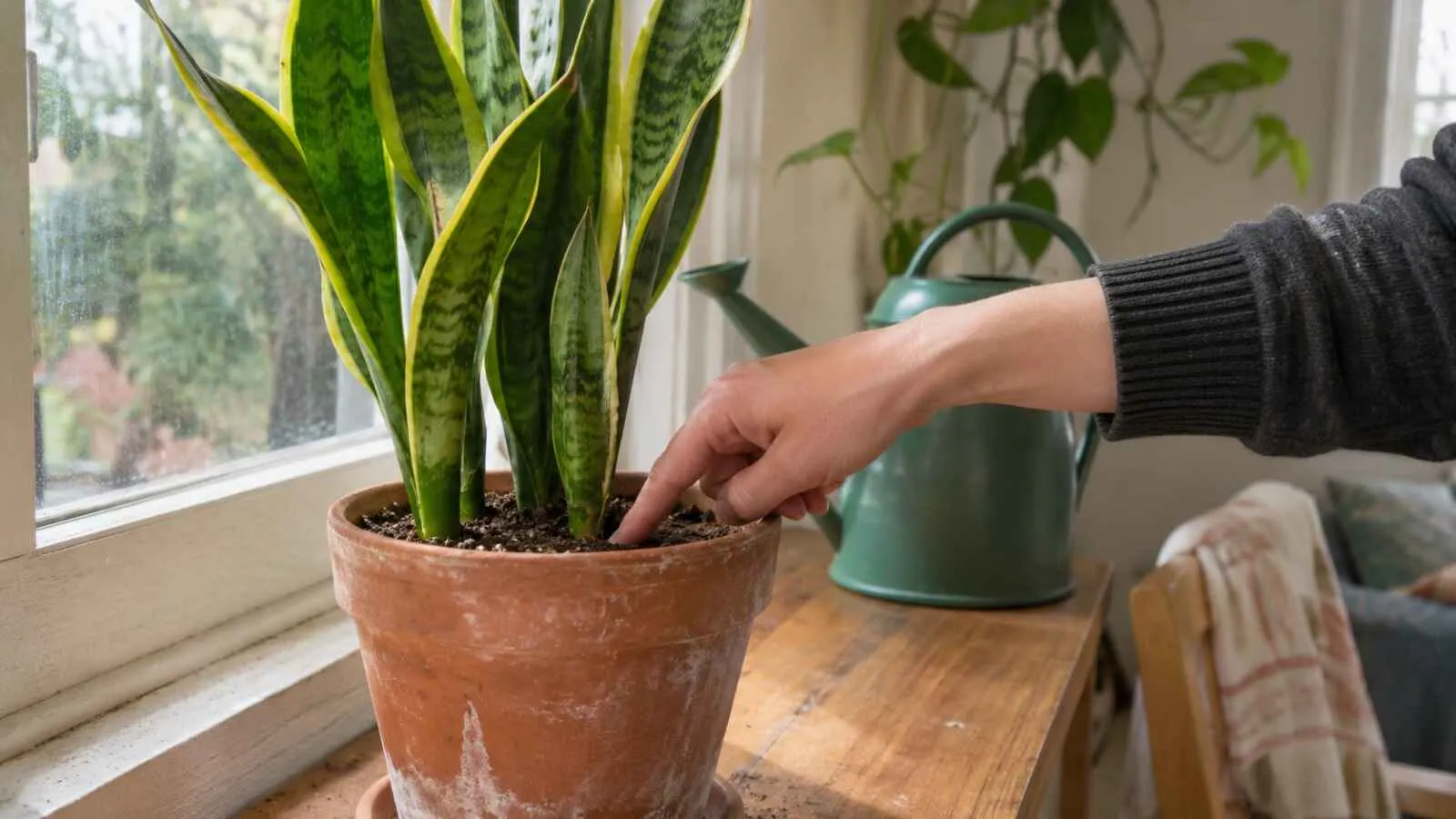
- Finger test. Illinois recommends testing the soil with your finger to a depth of two inches. If it is still damp, wait.
- Skewer or chopstick. In a large pot, push a clean wooden skewer into the mix. Iowa State Extension says moisture or a darker color on the stick means the plant doesn’t need water yet.
- Pot weight. Clemson notes that potting mix gets noticeably lighter as it dries. Compare the pot right after watering with how it feels days later.
- Moisture meters. Both Illinois and Clemson say these can be unreliable. Treat a reading as one clue, not an answer.
A single drooping or wrinkled leaf is not enough reason to water. Check the mix and the drainage first.
How to water a snake plant
- Water thoroughly. Pour slowly until water runs out of the drainage holes. Clemson explains that this also helps wash out excess salts.
- Let it drain, then empty the saucer. Don’t leave the pot standing in runoff. With a decorative cachepot, lift the inner pot out, let it drain fully, then set it back.
- Aim at the soil. Pour water onto the potting mix rather than into the leaf cluster.
- Use room-temperature water. Clemson gives 62 to 72°F and advises against softened water. Illinois suggests letting tap water sit out for 24 hours.
- Bottom watering works too. Illinois describes sub-irrigation: set the pot in a few inches of water in a sink or saucer, and take it out once moisture is visible at the top of the soil. Let it drain completely afterward.
If the mix has dried out hard and water runs straight through, Clemson suggests watering once and again half an hour later, or soaking the pot briefly. Don’t let the soil stay bone-dry for long, since salts can build up and harm the roots.
How often to water a snake plant in winter
Light and warmth drop in winter, and a snake plant grows slowly. NC State suggests watering every one to two months, and Illinois says to water just enough to keep the leaves from shriveling.
Treat those as reference points, not a calendar:
- A cool, dim room may need water even less often.
- A warm, bright room, or a spot near a heat source, may dry faster.
- Check the mix before every watering, and check deeper in large pots.
Related care guides for Snake Plant Care: Light, Water, Soil & Pet Safety
Signs of overwatering and underwatering
Iowa State describes these patterns for succulents in general, a group that includes snake plants.
| Sign | Overwatering | Underwatering |
|---|---|---|
| Leaves | Yellowing, soft and mushy; may drop over time. | Yellow, shriveled, brown, wrinkled or mottled. |
| Soil | Wet or damp at the surface; mold or fungus gnats in severe cases. | Dry and pulling away; very dry mix may resist water. |
| What to know | Often leads to root rot. | Succulents can go weeks without water, but roots can die if it goes on too long. |
The tricky part is that the symptoms overlap. Clemson says overwatering and underwatering cause similar problems, and Iowa State says root rot makes plants shrivel, which people often mistake for thirst and then water more.
If the leaves look thirsty but the soil is wet
Don’t add water. Damaged roots can’t take it up, so a plant may look dry while the mix is soggy.
A University of Florida plant-diagnostics specialist advises, in this UF guide to houseplant problems, checking the soil first and then the roots if it feels soggy. Healthy roots are white and firm; rotting roots turn soft and brown or black, and the soil may smell sour. The same article warns that an outer decorative pot can hold unseen water around the roots.
What to do if you’ve overwatered
- Stop watering and empty any water in the saucer or outer pot.
- Check that the drainage holes are open.
- Let the mix dry. Iowa State says plants can sometimes recover from rot once the soil dries out.
- Look at the roots if the soil stays soggy, smells sour or the plant keeps declining. Ease it out of the pot and inspect them.
- Remove soft, dark, rotten root portions with clean scissors, then repot the healthy sections in fresh, well-draining mix. Maryland Extension’s guide to diagnosing indoor plant problems recommends cutting out rotten portions and replanting the healthy sections.
- Wait before watering again. If the rot is advanced, Iowa State suggests discarding the plant or propagating healthy-looking sections.
If you trim leaves during cleanup, keep the clippings away from pets. Snake plants are toxic to cats and dogs; read our snake plant pet-safety guide for signs to watch for and what to do after exposure.
Common snake plant watering mistakes
- Watering on a fixed date. A recurring date is a prompt to check, not proof the plant is ready.
- Treating a dry surface as a dry pot. The top layer can dry long before the lower soil.
- Frequent small sips. They wet only part of the mix and make moisture hard to judge.
- Leaving water in the saucer or cachepot. The roots stay wet after you’ve finished watering.
- Answering every droopy leaf with water. Check the soil and drainage first.
Frequently asked questions
How often should I water a snake plant in summer?
There is no reliable summer interval for every home. Check the mix more often when the room is warm and bright, and water only after it has dried.
How often should I water a snake plant in winter?
NC State suggests every one to two months. A cool, dim room may need less, and a warm, bright room may dry faster, so check the pot first.
Should snake plant soil dry out completely?
Illinois Extension says to let the soil dry completely between waterings. In a large pot, check below the surface so you don’t mistake a dry top layer for a dry root zone.
Does a curled or wrinkled leaf mean my snake plant needs water?
Not by itself. Dry soil and a light pot support thirst; curling while the mix is wet points to root trouble. Check the soil and roots before changing your routine.
Can I water a snake plant once a week?
Only if your conditions really make the mix dry that quickly. Many snake plants need water less often, and watering a still-damp pot raises the risk of root rot.
Can I use tap water on a snake plant?
Generally yes, at room temperature. Clemson advises against softened water, and Illinois suggests letting tap water sit out for 24 hours.
How long can a snake plant go without water?
Iowa State says succulents can go weeks, sometimes longer, without water, but roots can die if the soil stays dry too long. Don’t treat drought as a goal. Water when the mix has dried.
The simplest rule to remember
Check the soil before you reach for the watering can. Let the mix dry, water thoroughly, and empty the saucer. Seasonal intervals help you plan when to check, but the pot’s moisture tells you when to water.
Also see: how often to water a ZZ plant, another drought-tolerant plant with its own checks.