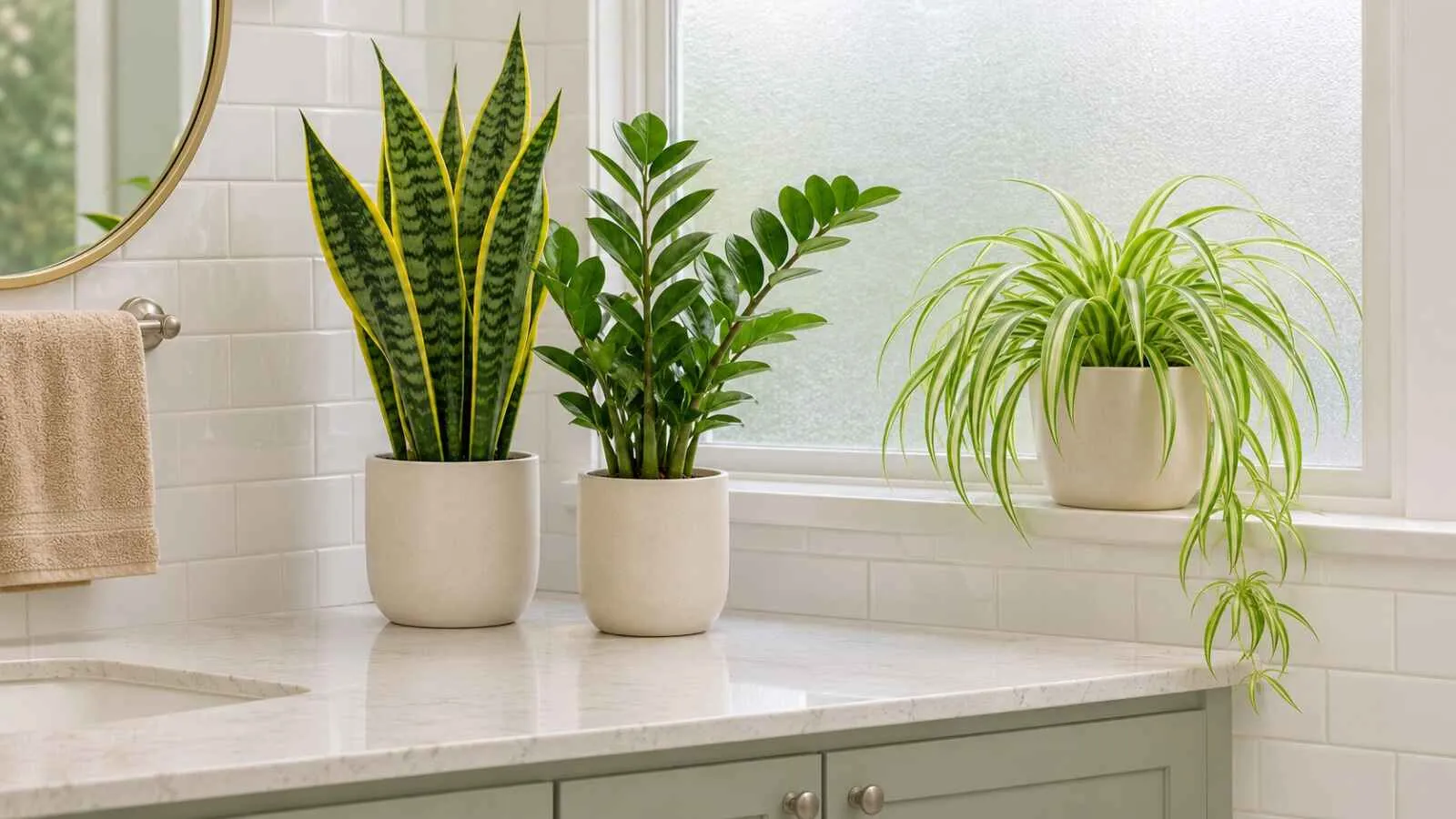
A bathroom with a frosted window is not a dark room. The glass is there for privacy, and most of the daylight that hits it still gets through. It just arrives soft, scattered and from no clear direction. For a short list of tough, shade-tolerant plants, that is close to ideal. For sun-loving plants, it is a slow decline.
This guide explains what a frosted window really gives a plant, how to measure your own light in two minutes, and which plants hold up to dim light, steam, and the occasional week of being forgotten.
What frosted glass actually does to light
Frosted, etched and textured privacy glass mostly scatters light instead of blocking it. Satin-etched glass can let through nearly as much light as clear glass, depending on the product. Privacy films and heavily patterned glass vary more, so measure the light instead of assuming.
Two things follow from that:
- There is no direct sun on the leaves. Even a south- or west-facing frosted window turns harsh afternoon rays into an even glow, so leaf scorch is rarely the problem here.
- The window itself sets the ceiling. A small frosted pane, a north-facing wall, or a window shaded by the house next door matters far more than the frosting.
Most bathrooms land in what extension services call low light, roughly 50 to 250 foot-candles at midday (University of Minnesota Extension; University of Missouri Extension). The University of Florida puts its low band even lower, at 25 to 100 foot-candles, and notes that an office lit only by fluorescent bulbs often sits around 40 foot-candles or less. Light also falls off quickly as you step back. University of Missouri Extension notes that even low-light plants usually do not get enough light more than about 10 feet from an average window, and in a small bathroom the useful zone is often much closer than that.
How to measure your bathroom light in two minutes
Guessing is where most bathroom plants go wrong. A free light meter app on your phone is accurate enough for houseplants.
- Pick a bright day and check around midday, when light is at its peak.
- Turn the bathroom lights off so you only read daylight.
- Hold the phone where the leaves will sit, with the sensor facing the window.
- Take readings at the sill, at 3 feet, and at the spot you actually want the plant.
- If the app shows lux, divide by about 10 to get foot-candles (1 foot-candle is about 10.76 lux).
Use the numbers like this:
- Under 50 fc: survival zone only. Choose a snake plant or ZZ plant, or add a small LED grow light.
- 50 to 150 fc: the typical frosted bathroom. Snake plant, ZZ plant, cast iron plant and pothos do well.
- 150 to 250 fc and up: usually right at the glass. Spider plants and ferns become realistic.
The best plants for a low-light bathroom
Each plant below appears on low-light lists from university extension services. The humidity notes and pet safety notes come from the sources listed at the end of this guide.
| Plant | Where it works | Humidity | Watering in a dim bathroom | Cats and dogs |
|---|---|---|---|---|
| Snake plant | Anywhere in the room, including far corners | Doesn’t need it | Let the soil dry fully | Toxic (ASPCA) |
| ZZ plant | Vanity, floor, shelf | Doesn’t need it | Let the soil dry fully | Poisonous if eaten |
| Cast iron plant | Floor or corner, within a few feet of the glass | Tolerant | Top inch dry | Non-toxic (ASPCA) |
| Pothos | Shelf or hanging near the window | Likes it | Top inch or two dry | Toxic (ASPCA) |
| Spider plant | Sill or hanging at the glass | Likes it | Evenly moist, never soggy | Non-toxic (ASPCA) |
| Boston fern | Right at the window only | Needs it | Barely moist at all times | Non-toxic (ASPCA) |
Snake plant: the safest bet
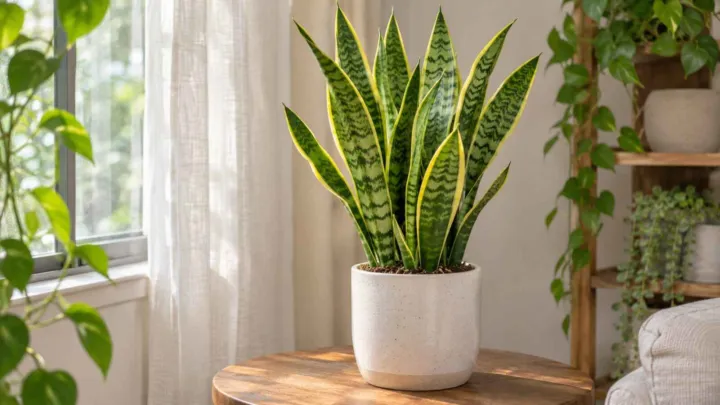
If you only buy one plant for a frosted bathroom, make it this one. Penn State Extension recorded a snake plant growing at readings as low as 25 foot-candles. It will not grow much at that level, but it will hold its shape for a long time. Its main risk in a bathroom is wet soil, not dim light. Our snake plant profile and snake plant light guide cover the details.
ZZ plant: built for neglect
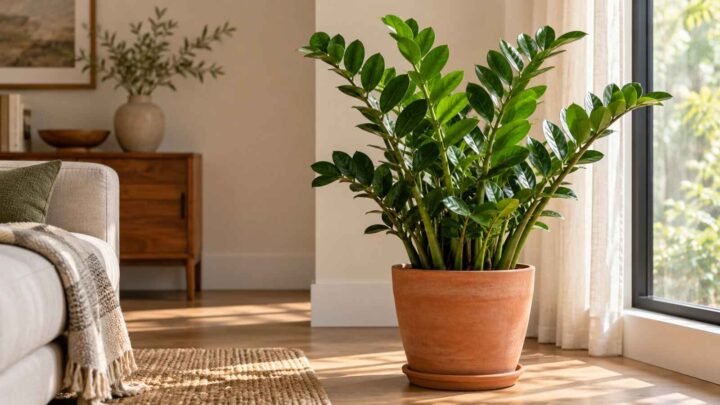
ZZ plants store water in thick rhizomes, which is why they handle long dry spells. Iowa State University Extension says the plant prefers to stay on the dry side and that problems start when the soil stays constantly wet. In a dim, cool bathroom, that means watering even less often than you would in a sunny room. See our ZZ plant profile and ZZ watering guide.
Cast iron plant: the pet-safe floor plant
Cast iron plant earns its name. It tolerates low light, uneven watering and cool drafts, and the ASPCA lists it as non-toxic to cats and dogs. It grows slowly, so buy the size you want.
Pothos: trailing green for a shelf
Pothos tolerates low light, though Penn State Extension notes that darker green types such as ‘Jade’ handle it better than heavily variegated ones. In a frosted bathroom, white or yellow streaks tend to fade over time. Keep it out of reach of pets, because it contains insoluble calcium oxalates.
Spider plant: good near the glass
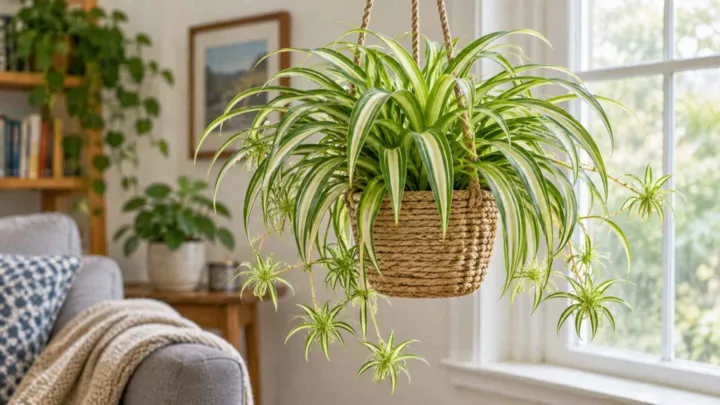
Spider plants like bathroom humidity, but they need more light than a snake plant to stay full and send out babies. Keep one on the sill or hanging right at the window. Iowa State University Extension lists spider plants among the plants sensitive to fluoride and other chemicals in tap water, which shows up as brown tips. Read more in our spider plant profile.
Boston fern: only right at the window
Ferns are the classic bathroom plant because of humidity. Clemson Cooperative Extension says thin-leaved ferns struggle with dry home air and do well in very humid rooms such as bathrooms. The catch is light. Clemson lists Boston fern as needing bright, indirect or filtered light, so it belongs on the sill of a frosted window, not on a dim counter.
Where to put plants in a bathroom
- Windowsill or hanging at the glass: your brightest spot. Use it for spider plants, ferns and pothos.
- Vanity within about 3 feet of the window: good for ZZ plant, snake plant and small pothos.
- Toilet tank or a far shelf: usually too dark for anything except a snake plant or ZZ plant. Measure before you commit.
- Floor corner: cast iron plant or a tall snake plant, if your reading stays above about 50 fc.
Avoid spots where hot shower spray hits the leaves directly, and avoid the sill in winter if cold air leaks around the window frame.
Watering and humidity in a dim, steamy room
Low light and high humidity both slow down how fast potting mix dries. That makes overwatering the number one way bathroom plants die. Oregon State University Extension puts it plainly: overwatering kills more plants than underwatering.
- Check the soil with your finger before every watering, not on a schedule.
- Use pots with drainage holes, and empty saucers after watering.
- Expect to water less in winter, when days are short and the window gives even less.
Shower steam helps ferns and spider plants, but the room should still dry out between showers. The U.S. EPA recommends keeping indoor humidity below 60%, ideally between 30% and 50%, and running the bathroom exhaust fan or opening the window while showering. A bathroom that stays damp for hours is good for mold, not for plants.
Can you keep plants inside the shower?
Sometimes. A shower caddy or a hook near the shower head gets the most humidity, but it is usually the darkest and most splashed spot in the room. Small pothos cuttings or a compact fern can work if your reading there stays above about 100 fc and hot water does not hit the leaves. Snake plants and ZZ plants do not belong in the shower. They want dry soil, not daily soaking.
Signs your bathroom is too dark
- New growth is pale, small or stretched toward the window. This is etiolation.
- Variegated leaves turn plain green.
- The soil stays wet for more than two weeks after watering.
- Lower leaves yellow and drop while the plant puts out no new growth.
If you see these signs, move the plant closer to the glass, swap it to a darker spot only if it is a snake plant or ZZ plant, or add a small LED grow light on a timer for 8 to 12 hours a day. If you have no window at all, that is a different situation. Our ZZ plant in a windowless room guide covers it.
Frequently asked questions
Is a frosted bathroom window enough light for plants?
Usually yes, for low-light plants. Frosted glass scatters light more than it blocks it, so the window’s size and direction matter more than the frosting. Measure at the plant’s spot. Above about 50 foot-candles, a snake plant or ZZ plant should hold up well.
What is the best low-light plant for a bathroom?
Snake plant is the most forgiving choice for dim light. If you have pets, cast iron plant is a non-toxic alternative that also handles low light.
Do bathroom plants really absorb moisture?
Not in a way that controls humidity. Plants take up very little water from the air. The exhaust fan and an open window remove shower moisture. Plants simply tolerate or enjoy the humid air.
Which bathroom plants are safe for cats and dogs?
Spider plant, cast iron plant and Boston fern are listed as non-toxic by the ASPCA. Snake plant and pothos are listed as toxic, and ZZ plant is poisonous if eaten.