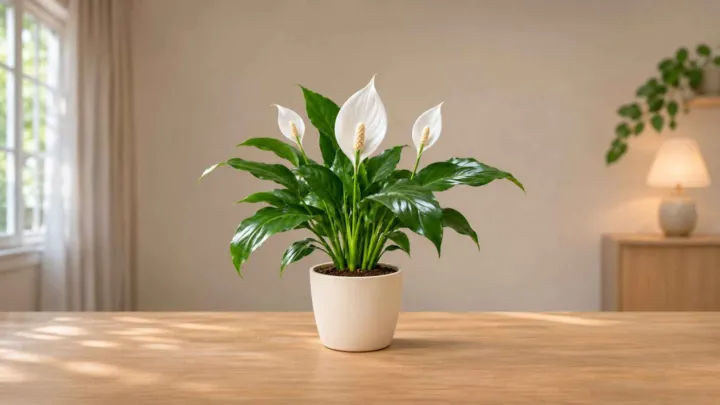
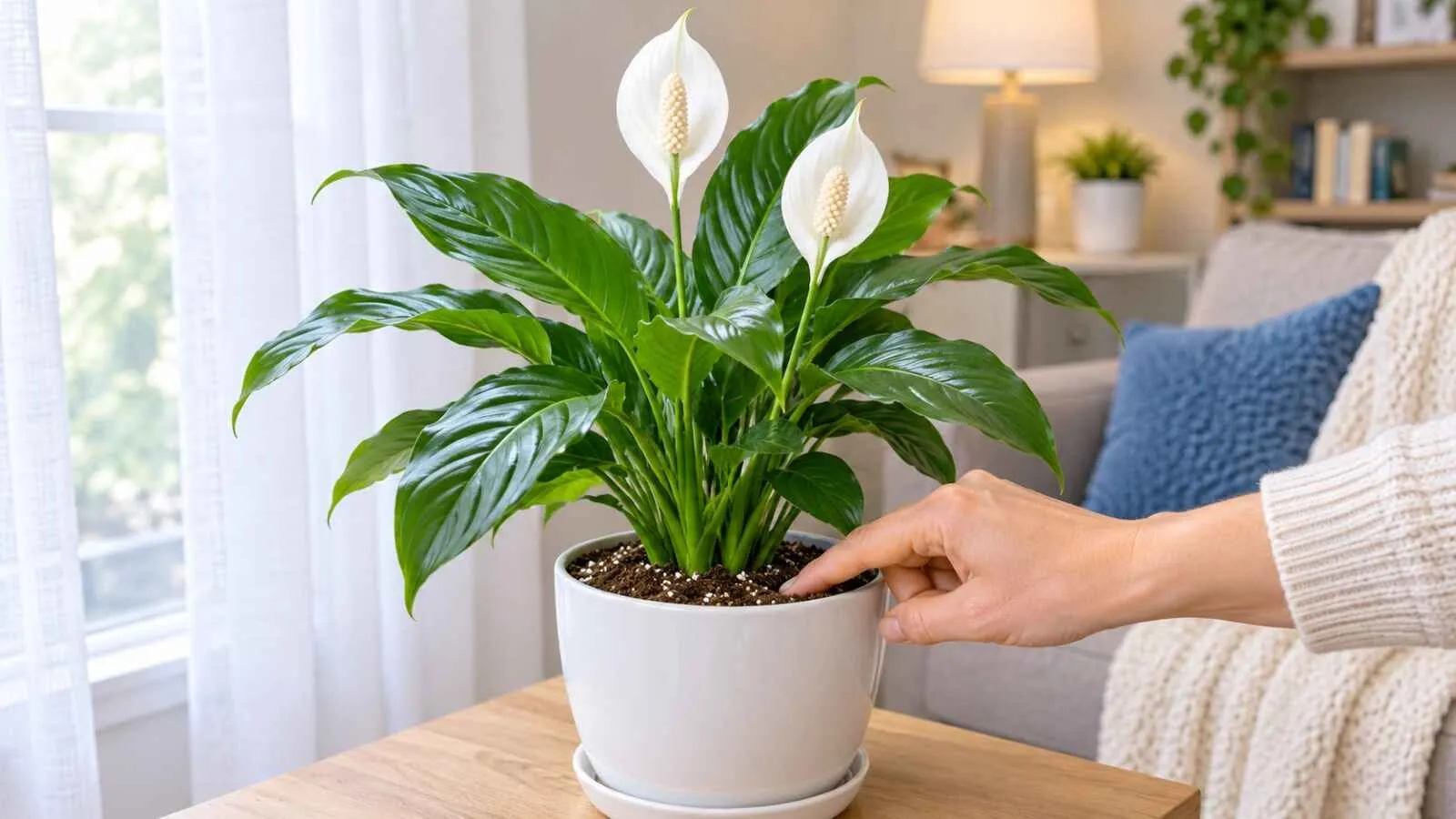
The moment you notice a peace lily drooping, it’s tempting to pour in more water. Feel the potting mix first. If it’s already wet, adding water can make things worse. Peace lily care indoors gets easier once you give the plant bright, indirect light and learn how quickly its pot dries in your home.
Related care guides for Peace Lily Scientific Name and Plant Identification
For the scientific name, mature sizes, and differences between cultivars, see our peace lily plant profile.
Peace Lily Care at a Glance
| What you’re deciding | A practical starting point |
|---|---|
| Where should it go? | Near a window with bright, indirect light. Filter strong direct sun. |
| Does it need water today? | Feel the upper mix. If it has begun to dry, water thoroughly and empty the saucer. |
| Which potting mix works? | An indoor mix that holds some moisture and drains freely. |
| Does it need a bigger pot? | Check the root ball first. When it’s crowded, choose a pot 1–2 inches wider. |
| When should it be fed? | Lightly, during spring and summer growth. |
These are starting points. A small nursery pot near a bright window will often dry sooner than a larger one in a dim room, so let your own plant guide the routine.
Where to Put a Peace Lily Indoors
Start near an east-facing window or an unobstructed north-facing one. The University of Maryland Extension rates north-facing windows as low light and east- or west-facing windows as medium to bright light. At a south- or west-facing window, use a sheer curtain or set the plant far enough back to keep strong sun off the leaves. Check the light where the leaves actually sit. A porch roof, nearby tree, or closed blinds can make a spot darker than the window direction suggests.
A peace lily can stay leafy in lower light, but growth slows and blooms become rare. The Royal Horticultural Society notes that plants survive in deeper shade but seldom flower there. If you’re choosing between a bright spot with filtered light and a corner at the back of the room, pick the brighter spot. In a room without windows, you’ll need artificial light; see how peace lily does under room lights and grow lights.
To keep the plant from leaning toward the window, the RHS suggests giving the pot a quarter turn each time you water.
How Often to Water a Peace Lily
There’s no reliable “every Sunday” rule. Clemson Cooperative Extension’s watering guide explains that pot size, potting mix, light, and room temperature all change how fast a plant dries. Use a schedule as a reminder to check, then decide by feeling the mix. Press a finger into the upper inch or so. You’re looking for slight drying near the surface while the root ball still holds some moisture.
| What you find when you check | What to do today |
|---|---|
| The surface looks dry, but the mix just underneath feels damp | Wait and check again another day. |
| The upper mix feels lightly dry and the pot is noticeably lighter | Water evenly until water runs from the drainage holes. Let the pot drain. |
| The pot still feels heavy and the mix stays wet between checks | Skip watering. Empty any standing water and check that the drainage holes are clear. |
| The leaves droop | Feel the mix before acting. If it’s dry and the pot feels light, water. If it’s still wet, check drainage and look for signs of root trouble. |
That last row matters. Clemson points out that damaged or rotting roots can’t take up water, so a plant can wilt in wet soil, and watering it then only makes things worse. If you can’t tell what’s wrong, our plant diagnostic tool can help narrow it down.
Expect to water less in winter. The RHS recommends cutting back slightly when growth slows.
Water Thoroughly, Then Empty the Outer Pot
Lift the plastic nursery pot out of its decorative cover and water it over a sink. Pour slowly across the surface so water reaches the whole root ball. Give the pot time to drain before putting it back. If you water in place, check the saucer or outer pot afterward and empty it.
For example, your peace lily might be ready on Monday one week but still damp the following Monday after several cloudy days. Use Monday as a reminder to check, not an order to water. Lifting the pot right after watering, and again when it’s ready, teaches you how both feel.
Can You Use Tap Water?
Often, yes, with two cautions. Clemson advises against softened water, because a salt-based softener adds sodium and chloride that can build up in the mix. If you have a softener, use an unsoftened source such as a bypass tap. Clemson also recommends water between 62 and 72°F, so avoid very cold or hot water.
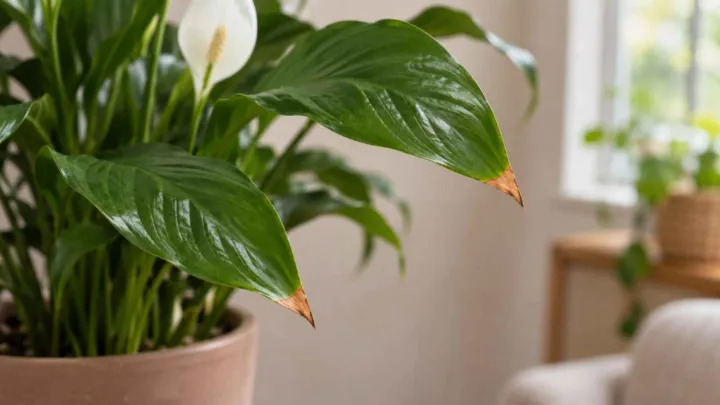
Fluoride is the other concern. The RHS notes that fluoride in tap water can damage peace lily leaves and suggests rainwater or filtered water when possible. If brown tips appear, check your watering, light, and fertilizer use too, since NC State Extension links brown tips to direct sun, underwatering, and low humidity as well.
Peace Lily Potting Mix and Repotting
Start with an indoor potting mix that stays lightly moist and drains after watering. If your mix is dense or compacts easily, perlite adds air space. The RHS suggests about three parts peat-free potting mix to one part perlite. A bagged mix that already drains well can be used as it is. Either way, use a pot with drainage holes or keep the plant in a draining inner pot.
When to Repot a Peace Lily
A few roots at the drainage holes don’t automatically mean it’s time. Slide the plant out and look at the whole root ball. Repot if you see a dense mat of circling roots, very little mix between them, or a pot that dries unusually fast even after a thorough watering. The RHS notes that a newly bought peace lily can usually stay in its original pot for a year or two.
- Choose a pot with drainage holes. Clemson’s peace lily fact sheet recommends going just 1–2 inches larger, so a crowded plant in a 6-inch pot moves to a 7- or 8-inch pot. A much bigger pot holds extra wet mix that can lead to root rot.
- Ease the plant out, gently loosen a few tightly circling roots, and set it at about the same depth in fresh mix.
- Fill around the sides, water to settle the mix, and let the pot drain. Check the new mix before the next watering, since the larger pot may take longer to dry.
Temperature, Humidity, and Fertilizer
Give the plant a warm spot away from drafts, heating vents, and cold glass. Clemson lists 68–85°F as a preferred daytime range and advises avoiding temperatures below 60°F. If your peace lily sits near a window in winter, check how cold it gets by the leaves overnight. That spot can be much colder than your thermostat shows.
If the air is dry, first move the plant out of the path of hot air. The University of Maryland Extension says it’s questionable whether misting really raises humidity, and suggests grouping plants together or running a humidifier instead.
Peace lilies need little fertilizer. Clemson suggests a balanced liquid houseplant fertilizer at one-quarter of the label strength every six to eight weeks in spring and summer, and warns that overfeeding can burn leaf tips and roots. If the plant barely puts out new leaves during the darker months, skip feeding until growth picks up. Many growers also let a newly bought plant settle in for a few weeks before its first feeding.
How to Get a Peace Lily to Bloom
If the leaves look healthy but you haven’t seen a flower stalk in a while, look at the light first. Move the plant gradually to a brighter spot with indirect light if it’s been in deep shade. Age matters too. Clemson notes that a lack of flowers usually comes from a plant less than a year old or one growing in too little light.
A plant that was covered in blooms at the store may flower on a different schedule at home. UF/IFAS research explains that most peace lily cultivars naturally bloom between January and August, so commercial growers use a plant hormone spray to have them flowering year-round for sale. The store bloom date won’t predict your plant’s next one.
Once a bloom fades, snip the stalk off at its base with clean scissors. Wear gloves when you do. The RHS warns that peace lily sap can irritate skin.
First-Week Checklist for a New Peace Lily
- Day one: Pick a bright spot and take the nursery pot out of its sleeve or decorative cover. Check the drainage holes and feel the upper mix before watering.
- A few days later: Feel the same spot in the mix and lift the pot again. This tells you more about when to water than any schedule from another plant.
- By the end of the week: If the mix is still wet from the store, check for trapped water and reconsider how much light the plant gets. If the pot drains and the roots have room, let the plant settle in before repotting.
Choose a spot a cat, dog, or small child can’t reach. The ASPCA lists peace lily as toxic to cats and dogs.
Frequently Asked Questions
Is a bathroom a good place for a peace lily?
It can work if the plant gets enough indirect light. Shower steam raises humidity briefly, but the plant still needs light and a pot that drains. Measure the light through frosted glass before choosing a permanent spot; our low-light bathroom guide shows how.
Can I divide a peace lily when I repot it?
Yes, if the plant has formed several clumps. The RHS recommends dividing a large, established plant in spring, making sure each section has plenty of roots and several strong stems. Pot each one in fresh mix, and wear gloves while you work. Let a newly purchased plant settle in first while you learn how it responds to your home.